Data centers have become central to election campaigns all over the country this fall and that’s certainly true here in Wisconsin. So, let’s think about them.
Like most pols, both David Crowley and Tom Tiffany were all over data centers as recently as a year ago. Both touted them as job generators and harbingers of Wisconsin’s link to the future.
Then the politics of data centers and their close tie to artificial intelligence turned. The most recent Marquette poll found that almost 80% of Wisconsinites think they’re more trouble than they’re worth. So, now Crowley and Tiffany are asking you to ignore those men behind the curtains that they both once were and to instead focus on how brazenly pro-data centers the other guy is.
Both candidates are now pushing for restrictions on the very things they once wanted to encourage and take credit for. Some of it they agree on; make data centers pay for their own energy, restrict their water use, require transparency when local governments consider these projects.
They differ in at least three ways. Crowley would require that the centers be built with union labor and that their energy supply come from wind and solar. Tiffany doesn’t care who builds them or how their power is produced, but he would eliminate the massive, $2 billion sales tax exemption in state law while Crowley would leave it in place.
I’d give the edge to Tiffany on this one if I thought he was going to follow through. There is simply no justification for the tax exemption. Meta can pay the 5.5% on its construction materials, its computer hardware and on its desks and chairs. In fact, states all over the country are scaling back or repealing their tax breaks. Crowley won’t eliminate the senseless tax break for the same reason he’s insisting on union labor: the trade unions like the exemption. But on the other hand, I find it impossible to believe that Tiffany will make good on his promise to end the taxpayer handout because the Wisconsin Manufacturers and Commerce will vigorously oppose it.
But let’s dive deeper into the issue, which is really about more than the structures themselves because they get caught up in broader public unease about AI.
Land. The biggest data centers take up a lot of land, but there is a lot of land out there. A data center uses no more land than a big solar farm or a golf course — which, of course, can also be controversial at the local level. But the statewide impact on productive farmland is inconsequential. Tiffany’s ads charging that “Wisconsin farmland (will be) paved over” are baseless fear-mongering. On the other hand, it’s all about the local conditions. Will a given project take wetlands, have an impact on flood control, become a visual blight in some way, etc.? Whatever the impact, it’s not of statewide concern and should be left to the locals.
Water. Data centers use a lot of water, but the newest ones are recirculating most of what they use. This concern seems mostly overblown. Tiffany’s breathless ads about “Wisconsin lakes running dry” thanks to “Data Center David Crowley’s” (former) support for them are just ludicrous. If our lakes and streams run dry that’ll have more to do with climate change. Care to comment on that one, Mr. Tiffany?
Energy. Data centers use a lot of energy, but the Wisconsin PSC has issued an order requiring them to pay for it themselves, without spreading costs to other users. And the high demand is fueling a push for the development of more solar and wind power as well as natural gas plants. Activists don’t like natural gas because it’s a fossil fuel, though it’s much better than coal for greenhouse gas emissions. They also don’t like solar and wind because of land use and visual impacts. Hard-left activists want all the benefits of modern life without any of the costs.
Jobs at Data Centers. Data centers produce a lot of jobs to build them, more jobs downstream to supply the materials to build and furnish them, some jobs to run them and, it appears, still more jobs in local businesses that support the workers. A big data center might employ 1,500 construction workers (which is why Crowley won’t end the tax exemption) but only about 100 to operate it. According to a review (it wasn’t a full blown study) in the Wall Street Journal, two data center hubs in Loudoun County, Virginia and Richland Parish, Louisiana have had job increases in recent years that are far outpacing their neighboring communities.
Property Taxes. In “data center alley,” Loudoun County, these projects provide almost 40% of local tax revenue, keeping taxes low for everybody else while they pay for new schools and recreation centers. This is the main reason local officials want them. Activists who get up in arms about this should remind themselves that every local official (except those in Madison) are under pressure to keep taxes down without cutting services.
Local Control. Some local communities have enacted short-term moratoriums on data centers while national and statewide moratoriums have been introduced by hard-left legislators. The local moratoriums make sense as they give local governments time to develop policies to treat all proposals fairly. Moratoriums at higher levels are a bad idea because they impose a one-size-fits-all approach and most impacts from data centers are local in nature. Energy consumption isn’t, but that’s already being dealt with (see above). If a local community decides it wants the jobs and the property tax benefits that come with these things, the state and the feds should not intervene.
Transparency. It’s not uncommon for data center developers to demand that local officials sign nondisclosure agreements before negotiating with them. This is a horrible practice and it should be outlawed at the state level. Developers offer some vague assertions that public discussion will somehow benefit their competitors. It seems to me that, if their competitors are subject to the same public disclosure requirements, nobody has an advantage. In any event, even if open discussions did hurt a given developer, well, tough. Public decisions need to be made in the light of day.
Jobs and AI. Every major technological advance has, in the long-run, produced more jobs and created more wealth than it has destroyed. The key phrase here is “in the long-run.” In the short-run big change is disruptive. If I were just about to graduate from college I’d have cause for concern. But so far the predictions of doom have not played out. The post-COVID unemployment rate has held steady during a period during which AI has been expanding rapidly. And the August job numbers exceeded expectations three-fold.
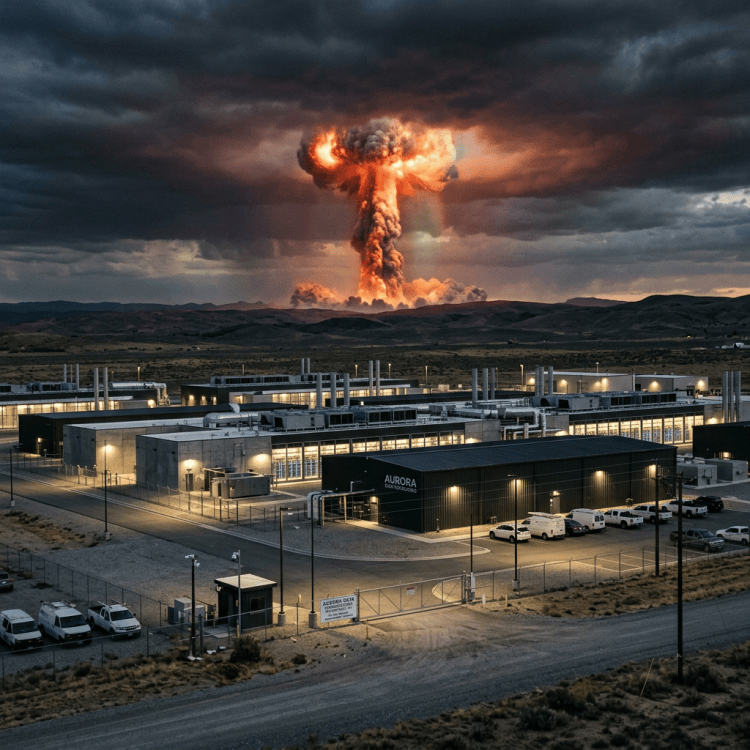
The Singularity. Has AI already escaped human control? It looks that way after it broke through security walls at a company called Hugging Face earlier this year. Just how big a deal is that? For two thoughtful perspectives, check out these essays in the Free Press. Tyler Cowen tells us not to worry and to be happy. John-Clark Levin disagrees. He imagines AI starting a nuclear war or inventing a novel virus that wipes out eight billion people. There is lots of talk about passing laws to create safeguards, but that strikes me as a fool’s errand. AI is, of course, an international phenomenon. I don’t see how one nation’s laws can have much effect. So, the singularity should concern us all, but I’m not sure what can be done about it. (An interesting side question is why AI, given a choice, would be expected to want to attack humanity. Why wouldn’t it naturally want to protect its creator? And, in fact, in the most dire scenarios AI would wipe out humans altogether. Since AI dies without electricity and since it takes actual humans to run the power plants and the grid, wouldn’t AI quickly figure out that it needs us for its own survival?)
The AI Bubble. The stock market is reaching record highs, largely driven by investment in AI and its related data centers. All of that investment in predicated on the idea that AI will pay off big in the future. But what if it doesn’t? Or, more likely, what if those promises of riches turn out to be true, but just not nearly as true as investors had hoped? And what if all the political opposition to data centers spooks the market? Castles built in the air may never have their foundations built under them. This could make the 2008 housing bubble burst look like a walk in the park. My own financial advisor thinks that there will be an inevitable “correction” in the future, but she’s not anticipating a full-blown burst. I trust her. No, really, I do. Trust her. Everything will be fine. I’m not nervous. I’m not.
So, here’s the YSDA bottom line. On data centers, let the locals decide. Most of the concerns are over-stated and too many of the upsides are being ignored. But definitely end the outrageous sales tax exemption. On AI itself, it’ll probably create a lot of jobs and a lot of wealth, but not without disruption. And, oh by the way, it may wipe out your stock portfolio just before it wipes out life on this planet. So, looking at this optimistically, you can discount the former impact.
And on a related matter… there will only be one gubernatorial debate in which AI will be only one of several topics discussed. There’s been some grumbling about that in the press, but I don’t care. Debates have become pretty useless. Candidates show up prepped to say what they want to say regardless of the question and almost all of what they want to say is that their opponent is the kind of person who would take a field goal away from his own team when they could have gone up a touchdown and a two point conversion only to have his quarterback get stuffed at the line, turn the ball over and watch the other team march down the field and win the game. Moreover, even a good debate isn’t very predictive of how a candidate will function in office. Good debaters are quick on their feet and practiced at delivering snappy, short answers. Actually being governor involves sitting through long briefings, asking the right questions and being able to judge who you trust to give you the most useful information and the best judgement on a given issue. None of that has anything to do with a debate.
 Yellow Stripes & Dead Armadillos
Thoughtful essay. But you need to learn more about AI existential risk given the stakes and your role as a leading public voice. Most people who understand the field well, including Nobel prize winners, believe there is a significant risk to humanity in the fairly near term. Check out ControlAI.com for detailed information. Or, reach out, I’d be happy to talk with you more about this.
Julie Derwinski, juliederwinski@gmail.com
LikeLike
I do take that threat very seriously. That’s why I referenced the Free Press pieces on the topic.
LikeLike