The other day I heard from a reader who noted that he had been abused on Facebook for writing things similar to a recent blog of mine about the antics of a Madison school board member and nonprofit director.
I suppose I may have taken some of the same criticism, but I wouldn’t know. I post my daily blog on Facebook and X and then go about my day’s business. I never look at the comments or interact with the sites in any way. Why? Well, first because I just don’t care what anybody has to say on social media. If somebody’s got a comment worth responding to they post it on my own site. But also life is short. I’ve got other things to do then scroll through Facebook all day. What a pathetic existence that would be.
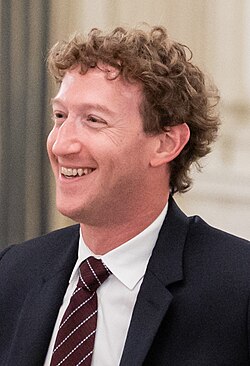
Meta is currently being sued by a large group of educators, parents, states attorneys general and others. Their argument is that Meta uses all manner of tricks to addict young people to social media to the detriment of their mental health.
I don’t know. I’m skeptical of that argument. It’s not like nicotine which is physically addicting. All it takes is a little will power to shut off your screen. It’s not that hard. And life is so much better and so much nicer without social media anyway. I know people close to me who have never had so much as a Facebook account. They function perfectly well in this world. Really they do.
And if a court does accept the argument that social media is designed to be addictive, well, where does that end? Aren’t all kinds of products and advertising designed to addict a person to something somebody’s trying sell? Don’t a lot of companies, from Coke to Crest, try to hook young consumers on their product early so that they form lifelong attachments to it? Where does product loyalty morph into addiction? Are we all just clay waiting to be molded by Mark Zuckerberg? Nobody’s got any personal agency? We’re all just helpless victims? Is that really your view of the world?
And this is just the personal side of it. It’s hard to overestimate how much damage social media has done to political discourse. In a syndicated oped carried by the Wisconsin State Journal on February 12th, writer and historian Joe Palaggi writes about how social media rewards outrage: “Modern America doesn’t suffer from a shortage of disagreement. We suffer from a surplus of amplification — much of it built into the incentives of modern media, politics and online life, regardless of ideology. Our divisions are constantly nudged, magnified, monetized and weaponized by systems that profit from keeping us emotionally engaged and perpetually agitated. Politics has become performance. The media has become incentive engineering. Social platforms reward outrage with visibility and punish restraint with obscurity. The result is a population that feels constantly under threat — yet oddly unable to name who actually benefits from the chaos. Most people don’t wake up wanting conflict. They want stability, dignity and a sense that the rules still matter. But outrage is contagious. Once it becomes habitual, it starts to feel like principle. We mistake emotional intensity for moral clarity. We confuse tribal loyalty with conviction.”
I hate to go all Nancy Reagan on you, but I just don’t understand why people who get upset by comments on social media don’t do the obvious thing and just say ‘no’ to it all. Just ignore the whole damn thing. It’s easy. Try it. You won’t go back.
 Yellow Stripes & Dead Armadillos
My one thought on this is a quote I lifted from the NYT:
“But what do so many modern senators do all day except own the opposition on social media and sit by the phone waiting for cable-news invitations? Our Congress today is, as the writer Jonah Goldberg puts it, a “parliament of pundits.”
It’s like a community drunk on attention seeking and keeping. None of this is doing the hard work to make life better in general. It’s cheap and easy and ego boosting. Like mirror gazing. Sometimes you like what you see and then you try your best to keep liking what you see. It’s an ancient addiction repackaged in modern technology. But it absolutely is a hard wired addiction.
So when your community is on social media (as is the case of many below the age of 55) and their opinion matters to you and you want to instead unplug, it’s a real problem. Like leaving fellow addicts, a person has to find a whole new community. They will be happier, but it takes real work to find that new community and as we all know it’s so much easier to wrestle with the devil you know ….
But you are so right, that guy is only as powerful as one makes him but I think the crux of getting off social media has to do with such a basic human emotion, fear of exclusion, that breaking this cycle is like fighting an addiction.
LikeLike
“I don’t know. I’m skeptical of that argument. It’s not like nicotine which is physically addicting. All it takes is a little will power to shut off your screen. It’s not that hard.”
For older adults? Sure, but as you mentioned the bigger concern is young people. It’s easier for you to dismiss it as simply a matter of will-power having grown up before the internet era, but there’s lots of studies out there showing when it’s introduced to kids so young it’s effectively rewiring the structure and function of their brains. Gen Z is extremely introverted and it’s no wonder quite frankly. At least cell phones are finally banned in our public school classrooms, it’s crazy they were ever allowed in the first place. I’m not saying a lawsuit is necessarily the answer, simply pointing out the addiction fears among young people in particular are legitimate. I think Australia’s pursuit of banning all social media for kids under 16 seems like a good test-run.
Pre-teens and teenagers are also much more vulnerable and sensitive to criticism and live in a world where they may not be able to just “ignore” social media comments. Many of them are probably going to school in a bubble where everyone embraces, shares, and repeats those things.
This is more of a tangent, but I think it’s also worth mentioning it seems pretty clear to me Trump never would have been elected in a pre-social media world. Social media coarsened the national dialogue, and led to millions of people getting “news” from slanted headlines and satiric memes in their feeds that they continually scroll through because it’s easier then reading a full article in a newspaper. It amplified the trends started by cable news and talk radio by lowering journalistic standards even further and making them available all the time regardless of your proximity to a radio or TV.
LikeLike
This feels like something someone would have written in 2010. Which is ironic because I distinctly remember seeing you on a local panel at around that time (Kristian Knutson of Isthmus) and you were right to say that the ADD nature of social media in journalism was unhealthy.
You should spend a couple minutes reading up on the science of addiction. What you’re writing isn’t just contradicted by the experts, it’s contradicted by what the companies say in private themselves.
Addiction to smart phones and social media is far more widespread than cigarettes have ever been. Expecting a 13-year-old to simply opt out of modern social existence is far more unrealistic than expecting them to turn down drugs or tobacco.
LikeLike
One of your better rants, my good friend!
LikeLike
dave it’s easier for us adults. I’ve worked with young people all my life. And this is really really is hard for kids. Parents are all doing their own battles with kids. I like Jean Twenges 10 Rules for Raising Lids in a High Tech World. And the trends now with AI “companions” that 70% of teens have is one of the most frightening trends. We need real people interaction
LikeLike
Thank you for sharing this—it’s a refreshingly candid perspective. I really appreciate the way you cut through the noise and remind us that we still have agency in how we engage with social media. Your point about setting boundaries and choosing not to participate in negativity is so practical, and it’s a lesson many of us need to hear in a world that often overemphasizes outrage and constant engagement.
I also like how you frame skepticism about “addiction” in context, comparing social media to other products that encourage habits. It encourages readers to think critically about personal responsibility without dismissing legitimate concerns entirely. Your reflection is a strong reminder that sometimes the simplest solution—stepping back and saying no—is also the most effective for preserving peace of mind and focus.
LikeLike