Last summer on my favorite public radio station, Rhinelander’s WXPR, I kept hearing how the impending elimination of federal funding was going to be “devastating” and how “life saving” alerts were at risk.
And here we are several months since the money went away and yet good ol’ XPR is still going strong. As far as I know, no lives have been lost.
What happened was predictable. Public broadcasting is valued by affluent liberals and well-heeled liberal foundations and they stepped up to the challenge. Even me. I’m not liberal nor especially affluent, but I increased my monthly pledge and tossed in a few extra bucks during the fund drives. In fact, this is happening all over the country. According to a comprehensive review in the New York Times, the predicted disaster hasn’t come to pass anywhere.
I’m a unicorn on this issue. I’m the rare public radio listener who supported the defunding of public radio.
I was strongly in favor of ending public funding because what if it had been reversed? What if liberal taxpayers were being forced to support Fox News? I thought public broadcasting had long relinquished any claim on the public purse when it drifted ever further left in the last decade or two. I’ve often sited the excellent piece by NPR editor Uri Berliner as the perfect narrative about what went wrong. And what happened to Berliner — he was forced out — was the perfect example of what happens at NPR to anyone who won’t toe the liberal line.
Of course I didn’t expect things to improve when the federal largesse went away. If anything. the liberal bias is even more pronounced now. So why do I listen? Two reasons. In the case of WXPR, it’s fun. It’s a funky, mostly volunteer hosted station with lots of great music shows. It carries some local news I wouldn’t get elsewhere and about 75% of that is unbiased, though the rest is slanted to the left. As for the national programs, I sometimes play a game where I listen to All Things Considered until I hear a magic word, like “marginalized.” Some days I don’t listen for very long.
And, while biased, NPR and PBS are not stupid or tabloid, which is what most of the rest of the broadcast media has become. Liberals got bent out of shape when Bari Weiss took over news programs at CBS, but the truth is that CBS hadn’t held to the standards of Walter Cronkite or even Dan Rather for decades. That legacy was already long gone. NPR and PBS might be populated by condescending liberals, but at least they’re not stupid condescending liberals. I consume those programs with my bias filter on and I can come away knowing more than when I started.
So, taxpayers are no longer being forced to subsidize programing consumed mostly by liberal elites. That’s a good thing. And yet public broadcasting wasn’t devastated and, I assume. all those life-saving alerts will continue to go out as needed. This is also a good thing.
 Yellow Stripes & Dead Armadillos
You’re missing the forest for the trees on CBS. Nobody has watched it in decades. It’s one tiny bargaining chip in Larry Ellison’s quest to build a massive media empire. Installing Bari Weiss at CBS and promising friendlier coverage of the Trump regime was just a play to get the regime to approve his much more consequential acquisition of Warner Bros. His 15% stake in TikTok is vastly more important than CBS News.
Also, what exactly were Walter Cronkite’s standards? His most consequential action was denouncing the Vietnam War on the air. Was that “objective” of him?
LikeLike
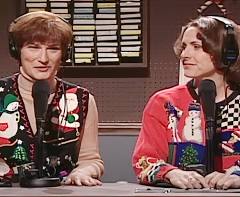
If that skit were done today both hosts would be wearing masks. And the lack of diversity is appalling.
Elon always says if you’re deleting things and you don’t have to add at least 10% back then you haven’t cut deep enough. Sounds harsh but this is a good example of why.
You will always have special interests that scream bloody murder at the thought of cutting anything. Some engineers at pre-X Twitter did exactly that. Elon cut 80% of staff and no doubt had to add back. X is now a much better product than Twitter ever was. Only way to know for sure is to make the cuts and see what happens.
Madison tends to do the opposite. It’s more a hoarder culture and why not? The people are more than willing to pay more and more for useless services.
LikeLike