It’s morning and I’m in mourning.
One of my favorite columnists of all time, David Brooks, is leaving the New York Times after 22 years. He’ll move over full time to the Atlantic and he’ll do something vague at Yale. So, I can still find his writing if I look for it, but I’ll miss his regular, thoughtful column in the Times. Along with the news quiz, he made Friday morning special.
Brooks has been what passes for a conservative on the Times opinion page, which of course makes him a liberal anyplace else in America, save maybe Madison, Berkeley and such places like that. When I was younger I thought of Brooks as the kind of thoughtful conservative that I liked, was eager to listen to and often found persuasive. Now when he writes something I usually think he got inside my brain and stole my own thoughts. I’ve been meaning to file a lawsuit over, I don’t know, copyright infringement or intellectual property rights or plagiarism or whatever it is. David Gruber would know.
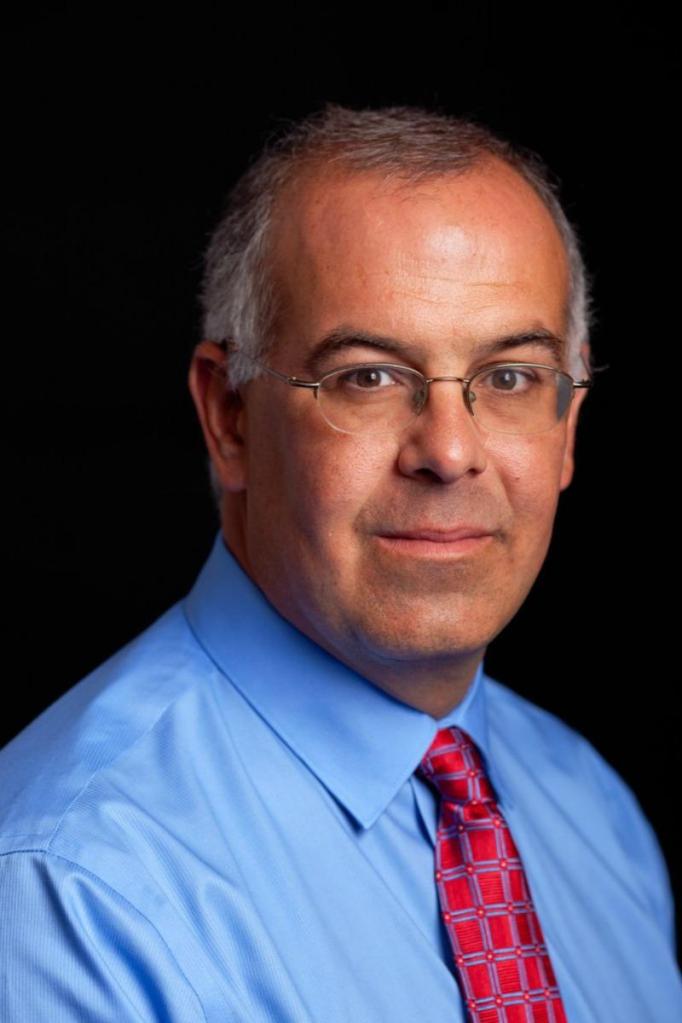
In his final column he wrote something that I’ve been meaning to write ever since I started YSDA, but I’ve never been able to quite articulate it. It goes like this:
If you’ve read my columns, you may know that one of my favorite observations from psychology is that all of life is a series of daring explorations from a secure base. People need a secure base. Part of that base is emotional — unconditional attachments to family and friends. Part of that secure base is material — living in a safe community, with a measure of financial stability. Part of that secure base is spiritual — living within a shared moral order, possessing faith that hard work will be rewarded, faith in a brighter future.
My friends in the abundance movement say that America has a housing crisis, and they are right. But more elementally, America has a home crisis. When people do not believe they have a secure emotional, physical and spiritual home, they become risk averse, stagnant, cynical, anxious and aggressive.
I couldn’t have said it better and I haven’t. It took a writer of the caliber of David Brooks to do it and it took even him 22 years to pull it off. It’s hard to understand how so many things are so demonstrably better (we had a worldwide pandemic for which we developed effective vaccines in a matter of months) and yet so many people are angry, sad and suspicious. I think the cause is that lack of stability, the lack of grounding in a place we call home, which can be a real, physical shelter or some kind of place to which we feel we belong. A place, as Garrison Keillor likes to say, where, when you go there, they have to let you in.
But it can also be a set of unshakable beliefs or a simple, quiet confidence that people are decent and fair and generous. And that’s what Donald Trump and hard-right populism have undermined. Trump’s supporters find a certain basic honesty in all his lies and crudeness. When they hear a normal politician talk in a high-minded way they hear sanctimonious cynicism. To their ear, Trump simply says out loud what those other pols are thinking. So, when he gets up at Charlie Kirk’s memorial service and says he hates his enemies, some people think ‘well, yeah, that’s what every politician thinks, they just won’t say it as Trump just did.’
Let’s not let hard-left populism off the hook either. That’s all about who you hate, who you resent, who you blame for your own problems just as much as hard-right populism is about blaming immigrants, intellectuals and experts. For the left it’s the one percent at the top and it’s those crude people without a four-year college degree on the bottom. If only they understood their own best interests the way we do. What liberals just don’t get is how powerful the idea of “owning the libs” is. If you’re a liberal and you want to truly understand what’s going on, study the phrase “virtue signaling.”
Trump has destroyed so many norms of decent human and political behavior. He’s made things so much less stable. And yet, he’s as much a symptom as he is the disease itself. After all, he got elected this last time with a clear majority of voters after they had already seen the first act. This is what a majority of voting Americans freely chose. In a counter-intuitive way, many Trump supporters were voting for stability of a sort: a return to a largely mythical time when people like them were the dominant cultural force.
So, the answer is to rebuild stability. There are a couple ways that can be done. One is with a strong man. Somebody who will act as your protector against the tide of change; change that is often in the form of people who don’t look like you or speak your language. Hence, Minneapolis.
The other way is harder and a lot more complicated. It’s to return to the norms, but with a fresh dose of honesty. For liberals it means emphasizing the value of community effort, of what an efficient government and nonprofits can do to improve life, while finding a way to not be so damn preachy and self-righteous about it all. For conservatives it means finding a way to sell the traditional conservative values of personal freedom, smaller government, lower taxes and the virtues of the free market while leavenng that with some noblesse oblige. For both liberals and conservatives it means sticking up for pluralism, free speech, reason and common decency, but doing it in a way that doesn’t come off as false and self-serving.
I hope that Minneapolis is our low point, that things have become so bad that the basic decency of most Americans has been awakened.
Democrats are likely to be swept back into many points of power in the fall. If they return to the divisive identity politics of their recent past, if they think they can buy their way back into long-term majorities with heaps of government programs, we will have ended the immediate threat of the worst of Trumpism, but we will have done nothing to fix the root of the problem.
For a lot of Democrats — especially moderate ones, like me — “abundance” is all the rage. If we have to build an agenda around one word, let’s make it “stability.”
That’s it for this week. Have a good weekend.
 Yellow Stripes & Dead Armadillos
Opportunity for you to leave the Shire Dave.
There’s a whole world of thoughtful opinions out there if you have the courage to find them.
LikeLike
I think David Brooks spent much of his career searching for and celebrating his perception of the middle (or the middle as perceived from his east coast elite perch), but recently he has adjusted his stance to advocate for morality, without much adherence to the political spectrum. He was out early on the need for a national uprising against Trump.
I met him a few years ago when he spoke at the UW and though I found him largely out of touch with the Midwest, I do admire that he’s an actual journalist. He makes calls and asks questions, even if those answers aren’t reflected in quotes in his columns. He knows you can’t do the job without talking to people and questioning your own biases instead of clinging to them. He searches.
All that said, he gets some big stuff wrong. I will always remember one of his “rules” about politics that he cited when he predicted that Hillary Clinton would win in 2016: “people vote for order.” They certainly don’t. Over and over and over.
LikeLike
“he got elected this last time with a clear majority of voters after they had already seen the first act. This is what a majority of voting Americans freely chose.”
Sorry to be that guy, but he only won a plurality in 2024, not a majority. It has always given me the faintest bit of encouragement that in none of his three elections did Trump win a majority of the votes. This is not to diminish the scope of the problem though, as Brooks put it in today’s column: “In 2024, 77 million American voters looked at Trump and saw nothing morally disqualifying about the man.” That is indeed is a sign of a deeply disturbed society.
LikeLike
Picky, picky, picky.
LikeLike
With a good friend who shares your view of Brooks, as I do, I proposed a discussion group, seminar, book club, some venue to dig deeper, explore his point of view, and think about what we as individuals can do to help build that stable home. “Community “ will get us through, caring for each other, our neighbors, friends, colleagues, drinking buddies, and those with whom we disagree.
LikeLike