In the first academic year since the Supreme Court struck down racial preferences in college admissions, the results are murky, though they point to some reduction in students of color. That’s unfortunate, but it also means that the ruling was necessary. Let me explain.
According to an investigative piece in the Wall Street Journal, the results of the SCOTUS ruling are highly variable by school. MIT saw a significant reduction in Black students in its freshmen class while the University of North Carolina at Chapel Hill, a school at the heart of the ruling, saw virtually no change. Other schools that the Journal looked at were all over the board.
In addition, some of the experts that the Journal interviewed suggested that one year’s data just doesn’t mean much. Schools are still adjusting and trying to figure out ways to get around the Court’s ruling, so it will probably take a few years to measure the impact. Maybe most importantly, the impact is likely to be only at the most elite schools, which may be why the change showed up at MIT but not at Chapel Hill. For the vast majority of schools, like those in the UW system outside of Madison, the court ruling will probably mean nothing.
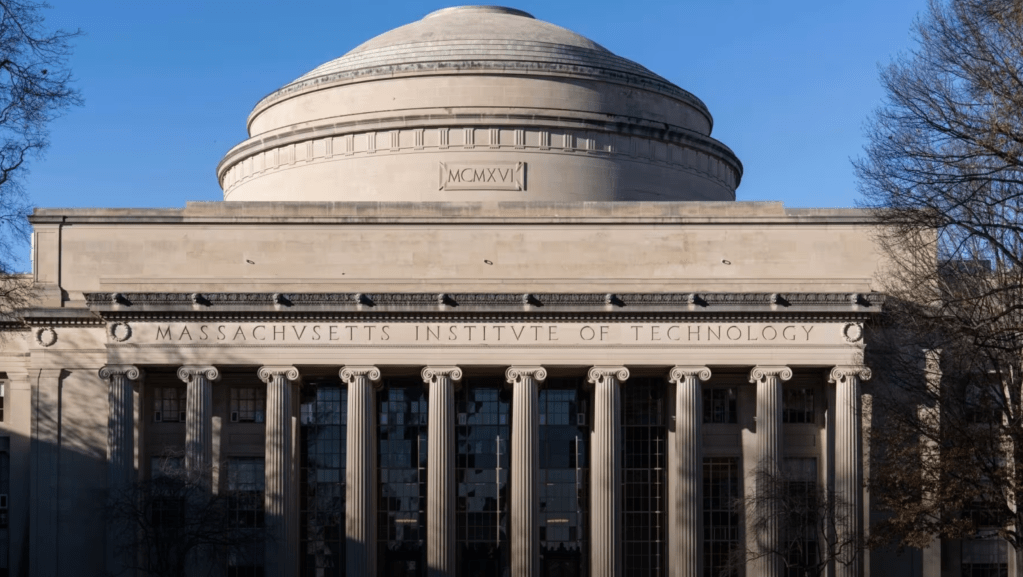
And speaking of my alma mater, this morning the Wisconsin State Journal reported that there was a significant impact at the UW Madison, where 65,000 applicants compete for something like 5,000 spots in a freshman class. Black freshmen will now comprise about 2% of the class of 2028 down from 3% last year. Hispanic students will make up 8.5% of the 2028 class, down from 10%.
But here’s the thing. If we didn’t see an impact at the most competitive schools it would have suggested that there was no need for the ruling in the first place. The basic argument against considerations of race is that they supplant merit with skin color. Some of these results suggest that some students may have been getting an unfair advantage due to race while qualified students didn’t get in because of their race. That’s just wrong.
Now, I know what you might be thinking: for centuries white students got an unfair advantage due to race. But the answer cannot be to employ discrimination in order to end it. The answer has to be to end discrimination.
The point is to eliminate race, gender and any other consideration that doesn’t turn on merit. We should strive for a system that is as objective as possible. Admitting that subjectivity can creep into any system is no excuse for throwing up our hands and pretending that objectivity is a myth or an unobtainable goal. The goal should be to root out subjectivity to the greatest extent possible — which, I think, is a pretty great extent.
Doing this will be all but impossible in the short run in academia. That’s because the use-discrimination-to-end-discrimination ideology is so pervasive there. But there are lots of encouraging signs from the business world where companies are retreating from and retooling their DEI programs to make more sense — and to be more effective. Too much of DEI as recently practiced has resulted in a backlash that has only made things worse.
And along these lines, what was so great about the previous effort, which had been in place for decades and which, at the UW, produced a rate of 3% Black students in a state where the Black population is about 8%? Shouldn’t that have led us to the conclusion long ago that this wasn’t working?
So, rather than finding ways to subvert the Court’s ruling, the better way to go would be to take it to heart and do everything possible to make college admissions — as well as everything else in American society — blind to race, gender and all other considerations of identity. A good start would be to remove the question about race and gender on college admissions forms. Make the process truly blind to identity.
The best way to get more students of color into the best schools is to improve their academic performance long before they apply to a college. And, again, on that score school districts like Madison, which obsess over race, have made zero progress in closing the racial achievement gap. Why do liberals cling so tightly to a system that delivers no results?
A color blind society was once, not so long ago, the liberal position on the matter. But somewhere over the past decade or two we lost our way. It became fashionable, especially in academia, to employ discrimination as a means of correcting past discrimination. That was a classic example of destroying the village in order to save it.
Because the enemy is discrimination itself. And the answer isn’t to rig the system, but to do a much better job of preparing all students to compete successfully within it.
 Yellow Stripes & Dead Armadillos
“We should strive for a system that is as objective as possible.”
This is the problem. In the real world, you usually don’t have to pretend that there is some objective way to determine who is most qualified for the job. “I like his vibe” or “I play golf with her dad” are perfectly acceptable justifications.
The strive for objectivity inevitably leads to a narrower, more rigid system with major blindspots. It’s the same issue that comes from schools focusing only on things that can quantified (standardized tests) at the expense of important things that are harder to quantify (critical thinking, arts, ethics, citizenship).
Indeed, the most “objective” admissions policy would be to do away with criteria altogether and simply hold a lottery.
LikeLike
My white male grandson, owner of a 35 ACT and a 4.3GPA while taking all the AP science courses and captaining two varsity sports, get rejected by Madison after more than two months on the waiting list.
He is very happy at very expensive Vanderbilt.
LikeLike