Wisconsin prisons are a mess. A dangerous and too often lethal mess for both inmates and staff. And yet, where’s the action from state lawmakers and the Governor?
This morning it was reported that yet another inmate has died in the prison system. This time it was a 19-year old man apparently murdered by his cellmate at the Green Bay prison. That brings to five the number of inmates who have died at either Green Bay or Waupun in the last year or so. In addition, a staff member was killed earlier this year at the long-troubled Lincoln Hills youth prison.
It’s widely accepted that Green Bay, Waupun and Lincoln Hills need to be shut down. The facilities are too old to be made safe. And shutting them down and opening new facilities in different communities creates the chance to start new staff cultures.
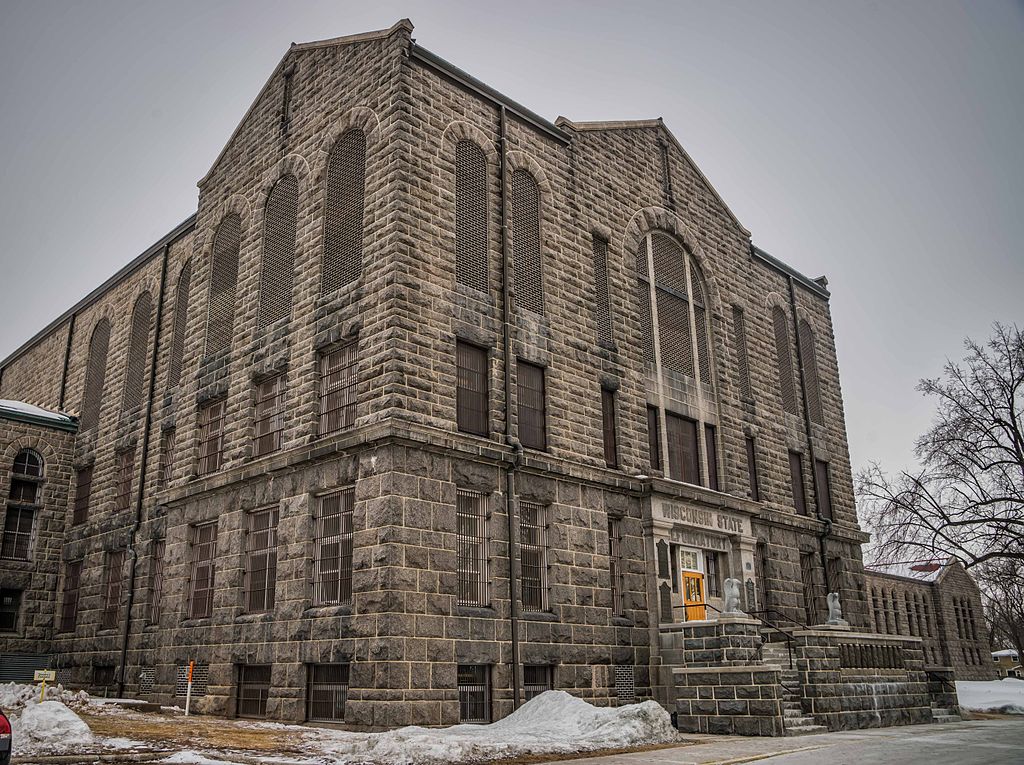
But nothing happens because Gov. Tony Evers and the Republican Legislature are at a stalemate. Republicans want a new prison to replace Green Bay while Evers refuses and demands unspecified legal system reforms that he hopes will reduce prison populations. Evers has proposed money for upgrades to the facilities but Republicans declare that as throwing good money after bad and so have rejected his proposals.
And so things just get worse. The stalemate leads to dead inmates.
The answer is a compromise. The Republicans are right that there are bad people in this world that need to be locked up for the safety of innocent people. But Evers has a point that the Wisconsin prison population is probably higher than it needs to be. Minnesota locks up about half as many people and has a crime rate about the same as ours.
So shut down Waupun and Green Bay and replace them with one new prison closer to or in Milwaukee, where many of the inmates come from. Make that facility as humane as possible to lessen the chances for recidivism among inmates when they are released. And perhaps make the total capacity of the new facility somewhat smaller than the current prisons. Explore whatever criminal justice reforms Evers has in mind.
But what’s happening on this front? Not a damn thing. There’s no Legislative Council study committee, which could be at work on this right now in the traditional study period during the long recess in election years. There’s no blue ribbon task force which the Governor or Speaker Robin Vos could appoint on their own.
To their credit, Green Bay officials are pushing for closure of the prison in their community as they see it as occupying prime real estate. But that’s just one part of a bigger problem. (Waupun’s mayor is fighting to keep his prison open because his city doesn’t have the same vibrant local economy. The state would have to provide an economic development plan for Waupun when it closes that prison.)
The advantage of a complex problem is that it produces enough details to make tradeoffs and compromises easier. The Governor and Legislature should get to work on that. Yesterday.
 Yellow Stripes & Dead Armadillos
Someone get Evan Goyke on the job. He came close to achieving a bipartisan breakthrough on prison reform a few years back in the wake of the (original) Lincoln Hills scandal. He had GOP co-signers on a bill in 2019 but it never went anywhere. Not sure what happened (maybe just COVID sucking up all the air shortly thereafter?)
https://doorcountydailynews.com/news/423539
https://captimes.com/news/local/neighborhoods/milwaukee-lawmaker-lays-out-plans-to-reduce-crime-save-money/article_b9d2be51-172f-5967-8b45-e12bf8a0e536.html
https://www.jsonline.com/story/news/politics/2019/10/25/prison-reform-state-rep-goyke-announces-bipartisan-effort-3-bills/4087029002/
https://wisconsinexaminer.com/2021/06/15/democrats-plead-with-republicans-to-discuss-criminal-justice-reform/
LikeLike
Agreed. I wrote a brief profile of him for Isthmus a few years ago. He’s a solid guy.
LikeLike
I studied this subject since 1983 when Wisconsin had fewer than 4000 prisoners and DOC was a DIVISION and Health and Social Services. I’d be glad to talk with you about this since I took legislators and DOC officials through a comparison with Minnesota several times.
Evers is very poorly advised by staff and advocates who don’t understand the driving forces and recommend fantasy solutions.
While the 19th century fortress provides villainous graphics, the major factor is unstable workforce in both prisons. These used to be great paying jobs for their area, but Covid led other employers to dramatically raise salaries so that locals no longer see this as a career.
In the short term, DOC could gradually redistribute Waupun’s population to its dozen medium security facilities. Slowly enough so that staff there could adjust. The programs at Waupun and Green Bay are reasonably staffed. The redistribution would continue until the guard to inmate ratio (without overtime or forced temporary transfers) approximates national norms. It’s not the number of guards on duty per shift that matters, but how well the staff know the residents.
A second step that could be immediately implemented would be to authorize judges to impose indeterminate (parolable) sentences. Truth in Sentencing would be left intact. TIs was motivated by alleging that Parole Commission overrode judges. This option allows judges to decide who has the possibility for parole. Implicitly,Doc could then front end programs for inmates so they could earn their way out early.
A major difference between MN and WI is homicide rates. In both states a large portion of prisoners are serving long sentences for homicide. It’s very difficult for Evers or even Vos to talk about because it has racial implications.
Ken Streit
Get Outlook for iOShttps://aka.ms/o0ukef
LikeLike
Agreed. I’d also advocate for a seamless and open criminal justice data system. Prison wardens have complete control over their inmates, but we have zero data about which wardens do better at rehabilitating their prisoners. Judges assign sentences, but we have zero data about which judges give sentences that result in changed behavior.
We are awash in data from police departments, but, with all due respect to police officers, they have the least impact on turning criminals into non-criminals. It’s terrible that we keep asking our police officers to arrest the same people over-and-over without holding the rest of the system accountable.
One would think this idea could be embraced by both parties, but I won’t hold my breath.
LikeLike