Give Uri Berliner credit for courage.
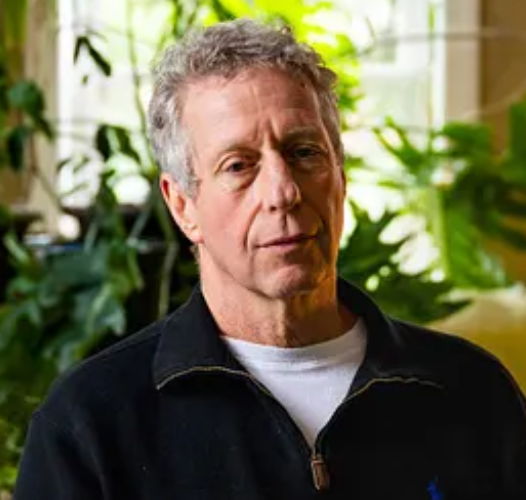
The NPR veteran business editor wrote a long, scathing and accurate piece about what’s become of his employer. It appeared yesterday on the site The Free Press. NPR bigwigs wasted no time in dismissing it out of hand, as opposed to maybe looking within to see if some of what Berliner wrote wasn’t true. The official NPR reaction was to, rather than deal head-on with any of Berliner’s detailed assessments, simply tar Berliner with the deadly accusation that his piece “ricocheted around conservative media” and that it was read and commented upon by none other than Elon Musk. ‘Nough said, I guess.
They also whined that Berliner didn’t give NPR management a heads-up, ignoring what he wrote in his piece about his months-long attempts to get an audience with his bosses to discuss this very issue.
But Berliner only wrote what lots of NPR listeners have been thinking for years. I first noticed it about a decade ago on the weekend news shows. It seemed like every story had some kind of identity-victimhood angle. Then I heard it creeping into the weekday programs. After Donald Trump there was an acceleration and after George Floyd, well, the dam had burst.
My theory is that young, woke producers cut their teeth on the weekend shows before moving up to the weekday broadcasts and that, plus the catalyst provided by events, drove the drive to the hard-left. And then it snowballed. As the preachy tone of NPR got out of hand, moderate and conservative, as well as old-line liberal listeners (like me), stopped listening or at least stopped listening much. So, what NPR heard was cheerleading from the listeners who were left (very, very left) and that was reinforced even more by funders whose tag lines routinely tout their commitment to “equity,” “racial justice,” and “diversity.”
So, now NPR’s narrative of America reads like a joint project of Ibram X. Kendi, Robin D’Angelo, Nikole Hannah-Jones and Kimberle Crenshaw. America is an irredeemably racist country. Absolutely everything has something to do with race and gender. Black, “brown” and indigenous people are never, ever to be reported on in any sort of negative light. Nor are women, unless of course they’re “Karens.” Transgender issues, no matter how newsworthy, will get an airing at least once every news cycle. Migrants will be reported on in only the most sympathetic terms. (Asians are more complicated, given their “white-adjacency.”) We don’t need to say it explicitly, but isn’t it clear enough? Straight, white men are the source of all evil.
I used to have those NPR “driveway moments” that the network still touts, but rarely produces any more. Those moments when a story on the car radio was so engaging that I couldn’t turn it off even when I arrived in my driveway have given way to my new NPR moments when I think to myself, “Oh, for cryin’ out loud…” and snap off the radio in frustration.
Berliner’s piece is important because NPR management and staff couldn’t avoid at least reading it, if not taking it seriously, and because news rooms around the country will be dealing with it in some fashion. It’s an over-used and pretentious platitude, but it’s true in this case: Berliner really did speak truth to power. And even if power won’t listen, those of us who hear what Berliner hears appreciate his courage for saying it out loud.
As a service to YSDA readers who might not take the time to read the entire lengthy piece, here are some of our favorite excerpts.
It’s true NPR has always had a liberal bent, but during most of my tenure here, an open-minded, curious culture prevailed. We were nerdy, but not knee-jerk, activist, or scolding.
In recent years, however, that has changed. Today, those who listen to NPR or read its coverage online find something different: the distilled worldview of a very small segment of the U.S. population...
Back in 2011, although NPR’s audience tilted a bit to the left, it still bore a resemblance to America at large. Twenty-six percent of listeners described themselves as conservative, 23 percent as middle of the road, and 37 percent as liberal.
By 2023, the picture was completely different: only 11 percent described themselves as very or somewhat conservative, 21 percent as middle of the road, and 67 percent of listeners said they were very or somewhat liberal. We weren’t just losing conservatives; we were also losing moderates and traditional liberals.
An open-minded spirit no longer exists within NPR, and now, predictably, we don’t have an audience that reflects America...
Race and identity became paramount in nearly every aspect of the workplace. Journalists were required to ask everyone we interviewed their race, gender, and ethnicity (among other questions), and had to enter it in a centralized tracking system. We were given unconscious bias training sessions. A growing DEI staff offered regular meetings imploring us to “start talking about race.” Monthly dialogues were offered for “women of color” and “men of color.” Nonbinary people of color were included, too.
These initiatives, bolstered by a $1 million grant from the NPR Foundation, came from management, from the top down. Crucially, they were in sync culturally with what was happening at the grassroots—among producers, reporters, and other staffers. Most visible was a burgeoning number of employee resource (or affinity) groups based on identity.
They included MGIPOC (Marginalized Genders and Intersex People of Color mentorship program); Mi Gente (Latinx employees at NPR); NPR Noir (black employees at NPR); Southwest Asians and North Africans at NPR; Ummah (for Muslim-identifying employees); Women, Gender-Expansive, and Transgender People in Technology Throughout Public Media; Khevre (Jewish heritage and culture at NPR); and NPR Pride (LGBTQIA employees at NPR)...
Concerned by the lack of viewpoint diversity, I looked at voter registration for our newsroom. In D.C., where NPR is headquartered and many of us live, I found 87 registered Democrats working in editorial positions and zero Republicans. None...
NPR’s news audience in recent years has become less diverse, not more so. Back in 2011, our audience leaned a bit to the left but roughly reflected America politically; now, the audience is cramped into a smaller, progressive silo.
Despite all the resources we’d devoted to building up our news audience among blacks and Hispanics, the numbers have barely budged. In 2023, according to our demographic research, 6 percent of our news audience was black, far short of the overall U.S. adult population, which is 14.4 percent black. And Hispanics were only 7 percent, compared to the overall Hispanic adult population, around 19 percent. Our news audience doesn’t come close to reflecting America. It’s overwhelmingly white and progressive, and clustered around coastal cities and college towns...
With declining ratings, sorry levels of trust, and an audience that has become less diverse over time, the trajectory for NPR is not promising. Two paths seem clear. We can keep doing what we’re doing, hoping it will all work out. Or we could start over, with the basic building blocks of journalism. We could face up to where we’ve gone wrong. News organizations don’t go in for that kind of reckoning. But there’s a good reason for NPR to be the first: we’re the ones with the word public in our name.
 Yellow Stripes & Dead Armadillos
“The official NPR reaction was to, rather than deal head-on with any of Berliner’s detailed assessments, simply tar Berliner with the deadly accusation that his piece “ricocheted around conservative media””
You must have read a different story than I did. It was a pretty thorough article, referring to many other media leaders who shared Berliners’ concerns and providing insight into the reaction at NPR.
LikeLike
Sadly I agree with much of what you said. Also I am bothered by the overly friendly, chatty and non professional talk. News just the news, Music just the music.
that is what I am paying for.
LikeLiked by 1 person
I keep wondering if part of the problem is with the shift in professional journalists these days…no longer curious, nosey self-starters and learn-on-the-job people. Instead so many are over educated products from elite institutions, over credentialed, and seemingly opting in many ways to serve as academics loaded with expertise and analysis capabilities rather than open-minded research and report the facts with street smarts people who can relate to their fellow ‘common man’ non-elite existence of most Americans.
LikeLike
It’s ironic that Robert MacNeil died the same week that Uri Berliner’s critique appeared. MacNeil was the antithesis of what dominates journalism today.
LikeLike