I was going to write about the new redistricting maps today, but yesterday the Madison school district announced that it had hired Joe Gothard as our new superintendent. So, we reorganize. Redistricting tomorrow. Gothard today.
The school board did the right and obvious thing. Gothard had just been named national Superintendent of the Year for his work leading the larger and more diverse St. Paul district. He grew up in Madison, went to Madison public schools, graduated from Edgewood, worked his way up from teacher to principal to the Doyle Building and was a finalist for the top job here in 2013 when the board chose Jennifer Cheatham instead. He’s well known here and everybody who knows him seems to think highly of him. And the other two candidates were awful and mediocre, respectively. Both had been forced out of their last jobs after only two years. Those who had worked with Mohammed Choudhury in Maryland couldn’t believe anybody would hire this guy. Yvonne Stokes seemed okay, but was not in Gothard’s league.
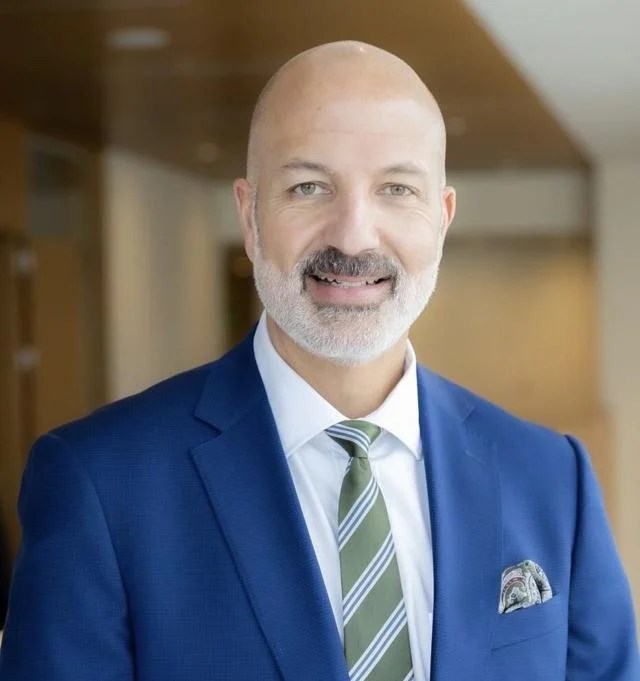
But there were two things in this morning’s Wisconsin State Journal story that I found concerning. The first was that, once again, he wouldn’t talk to the press. You would think on the day he was selected he would want to do interviews. But to my knowledge he has not given a single interview to the Madison press since the process began. Many have praised Gothard for his transparency and for his communication skills. Well, great, but central to that is answering questions from people trained to ask hard ones.
The other thing that raises a red flag for me is this quote from a podcast Gothard did regarding building “systemic equity” into a school district. According to the State Journal story, among the initiatives he discussed was embedding a graduation requirement for critical ethnic studies, “a way for students to understand who they are as individuals and to see their place in society through their history, through their lived experiences, how that has intersected with their education, with their community.”
So, he’s suggesting requiring students to take a course in critical race theory and to learn to think of themselves as either victims or oppressors? He values “lived experience” over facts and reasoned arguments? Sure sounds like it. If that’s what we’ve got coming then it means more of the same failing policies and no progress on reducing achievement gaps because we’ll continue to address the wrong problems. It won’t be disastrous. It will be a continuation of the disaster.
I know what you might be thinking. I’ve been touting this guy from day one and now I get what I’ve said I wanted and the first thing I do is criticize the choice. But I don’t see my job as leading cheers for anybody or anything. What I try to be is appropriately critical in a fair way about everything and everybody whether they’re on my team or not. In fact, I try not to have a team. I had been critical of Gothard and the others for not talking to the press earlier and I certainly would have taken issue with that quote about equity if I had known about it.
Anyway, of the choices the board was left with Gothard was far and away the best one. We’ll see what and how he does. There are those concerns, but there’s also reason for optimism. Welcome back home, Mr. Gothard.
 Yellow Stripes & Dead Armadillos
Why should a graduation requirement for critical ethnic studies be problematic? Our students should know of the contributions of our German, Nordic, English, and Eastern European migrants. And how they banded together to fight a war to eliminate slavery and another to defeat the Nazis. Today, we have a thriving Hispanic culture in Madison, and many smart Asians are drawn to the university. We’ve had prominent black civic leaders, musicians, a police chief, and a school superintendent. Or do you think there will be a different message?
LikeLike
Totally agree with that perspective, Tom. My problem with what Gothard seems to be proposing is that it suggests a perspective, often referred to as “critical race theory,” which is quite controversial and deservedly so. That perspective casts virtually all issues in a racial light and makes a simple distinction between oppressors and victims. White students are invited to think of themselves as oppressors and Black students as victims simply by virtue of their skin color. That’s what I object to.
LikeLike
I’m sure you’re right. My point was that “ethnic studies” could be good, but I would bet the message will be CRT.
LikeLike