The hard-left is in retreat. The evidence is everywhere.
I started YSDA three years ago primarily to write things that I suspected other moderates and erstwhile liberal Democrats were thinking, but felt too intimidated to say out loud. Are we really now against a color blind society? Do we really think it’s okay to discriminate against people based on their race to make up for past racial discrimination? Is it really such a great idea to use drugs and surgery to change the genders of children before puberty? Is it really impossible to use objective measures of merit in college admissions or for hiring decisions? Can free speech actually cause “harm” equivalent to physical violence?
My answer to all those questions and more has been a resounding No!
It’s not like I was a voice in the wilderness. In fact, on our Resources page I’ve catalogued lots of websites and writers, like Ruy Teixeira, John McWhorter, Pamela Paul, Bret Stephens, Ross Douthat, William Galston, David French and others, who more or less share my perspective.
But still, the intolerant, anti-liberal, hard-left narrative was getting people cancelled and dominating the media, academia and corporate America. To speak out against any of it, or to even raise a doubt, could end careers. Just one prominent example. The editor of the New York Times editorial page got fired because he ran an oped from Sen. Tom Cotton (R-Arkansas) who, in the wake of the George Floyd protests, called for the use of federal troops to quell violence. That’s not something I agreed with, but the guy is a United States Senator with presidential ambitions, and so isn’t hearing his perspective — and getting the chance to judge it as kind of looney — what editorial pages should be doing? Guess not. We need to be protected from “harm.”
But now I get the strong sense that the tide is turning. I’m not talking here about conservatives, who have long made hay out of “woke.” I’m talking about moderates and liberals who have disagreed with the hard-left, but wouldn’t speak up for fear of losing credibility or friends. Here’s my evidence.
Pro-Palestinian activists bring all this into stark relief. What may have done more for the moderate-liberal backlash than anything else is the October 7th attack on Israel. The hard-left has always had a love affair with the Palestinians and they’ve always seen Israel and its U.S. ally as “oppressors.” But when they apologized for and even applauded the slaughter of Israeli civilians and the taking of hostages, that created a fissure on the left that is widening to this day. (To be sure, I think the Netanyahu government has gone too far in its reprisal, but that doesn’t make Hamas okay.) And I think and I hope that it has prompted a deeper discussion about what the hard-left believes in a host of areas.
The disgrace of Ibram X. Kendi. Last year Kendi, the father of “anti-racism,” took a hard fall from grace when he lost track of $55 million that had flowed into his institute after the Floyd murder. Kendi has been the Joe McCarthy of his time, calling anyone who might question his views a racist and, for the most part, getting away with it. So, I thought it was significant when New York Times columnist Pamela Paul called out not just his bad book keeping but his bad books, right there in the pages of the establishment liberal daily Bible. Outside of my own, I can’t say that I’ve noticed a flood of similar columns coming out of the left, but at the very least it seems like Kendi’s star has dimmed and much of the left may just want to move on from him.
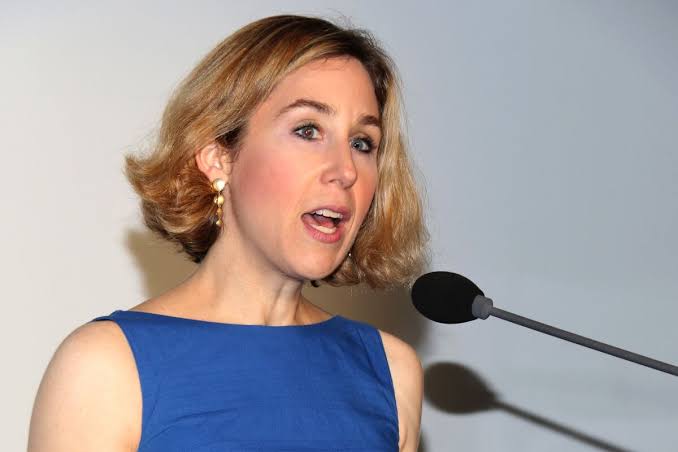
Questioning transgender ideology. Speaking of Paul, she wrote another courageous piece in the Times just last week. In a lengthy and carefully researched column, she questioned the wisdom of treating children experiencing gender dysphoria with sometimes irreversible drugs and surgery. She talked to adults who underwent those treatments as kids and now regretted it because professionals, either under pressure from their colleagues and activists or because they bought into this gender ideology themselves, didn’t probe deeper to correctly diagnose the problem. I disagree with Republicans who want to ban these treatments for minors altogether because I think it should be a family decision. But, like Paul, I just think we should let mental health professionals do their jobs without being called “transphobic” just for suggesting that changing genders might not be the best course for a child.
The return of merit. Also last week the Times reported that Dartmouth is returning to the use of SAT scores to evaluate applicants. Wrote David Leonhardt: “Three Dartmouth economists and a sociologist then dug into the numbers. One of their main findings did not surprise them: Test scores were a better predictor than high school grades — or student essays and teacher recommendations — of how well students would fare at Dartmouth. The evidence of this relationship is large and growing, as I explained in a recent Times article.” Other schools are watching Dartmouth’s experience and may soon follow suit. Also, last summer’s Supreme Court ruling striking down affirmative action for college admissions, and potentially undermining all manner of affirmative action programs, has met with mostly a shrug outside the hardest of the hard-left. The Democrats have been pretty quiet about it because they know that about 70% of Americans oppose affirmative action.
The retreat of ESG and DEI. Environmental, social and governance measures have been popular on Wall Street for about a decade. Pushed by activist investors and sometimes by employees, the idea was to measure a company’s performance on environmental sustainability (usually greenhouse gas emissions), social issues (diversity, equity and inclusion programs), and governance (the racial and gender diversity on boards of directors and in the executive suites). All that stuff looks fine to me on the surface, but there’s a growing body of research that shows that none of it does any good. In fact, there’s evidence that DEI programs which are built around blaming white people for everything result, not surprisingly, in resistance, resentment and several steps back in trying to create better understanding. Also, there’s evidence that an obsessive focus on these things is eating up productive time that would otherwise be going into the business at hand. So, I thought it was a good thing when the Wall Street Journal reported that companies are stepping back from their ESG programs after investors withdrew over $8 billion from “sustainable” funds in the first three quarters of last year.
I am not suggesting that the hard-left is done. But it feels like those of us who consider ourselves moderates or traditional liberals have more breathing room to challenge the strange, illiberal views of those on the hard-left. I dismiss anything Ron DeSantis has to say. But Pamela Paul is a different story.
 Yellow Stripes & Dead Armadillos
If the hard left is in retreat, why is the Wisconsin Department of Public Instruction bringing in Ibram X. Kendi and Robin DiAngelo this year?
LikeLike
Didn’t know they were. But DPI will be one of the last places that any of this backlash penetrates.
LikeLike
Perhaps the totality of “ESG” branding was taken overboard, but I firmly believe that the “E” in there, environmental sustainability, is absolutely something more people should pay attention to in regards to their investment accounts. Lots of people are passively supporting polluting industries without even realizing it.
You don’t need a specific “ESG” branded fund though, just look up for yourself whether a given fund is invested in fossil fuels. This website makes it easy: https://fossilfreefunds.org/
LikeLike