Hard on the heels of doing the right thing the UW found a way to do the wrong thing.
Only days after reaching — after lots of unnecessary twists and turns — an historic agreement to move forward on the much-needed new engineering building on the Madison campus that had been held up over concerns about its diversity, equity and inclusion programs, the UW Madison announced that it hadn’t learned the lesson of that whole saga. It is launching a program to give money to Native American students, whether they need the help or not, simply because they are Native American.
The ostensible reason for the new program is that the Madison campus sits on land that once belonged (a problematic concept since tribes had no concept of ownership of land) to what we now call the Ho-Chunk Nation. The new program will assure a free UW education to all members of indigenous tribes, regardless of whether or not they are members of Ho-Chunk. It’s also not clear who qualifies as a tribal member.
And, since the program is a “last dollar” program and it will not take into account financial need, doesn’t this mean that middle class families that don’t qualify for other needs-based scholarships will get a lot more benefit than poor families? The UW says that a full-ride scholarship, including tuition and living expenses, costs almost $30,000. A lower-income Native American family might qualify for Pell grants and other programs that bring the cost down to, let’s say, $15,000. So, under this program they get $15,000 of benefit. But the comfortable middle class indigenous family doesn’t qualify for the other programs, so apparently they would be eligible for the full $30,000. How is that fair? How does this make any sense?
Moreover, why is the program even necessary given existing programs that cover students from poor families? Bucky’s Tuition Promise guarantees the university will cover tuition and fees for students from low-income households. Bucky’s Pell Pathway program covers the full financial needs of students from low-income families through grants, scholarships and work-study opportunities. The only apparent difference in this program is that it’s based on identity and there’s no means testing. In other words, this program is carefully targeted to serve students who don’t need the help.
These are the kinds of tricky issues that come up whenever we try to assign benefits based, not on objective merit or documented need, but upon simple (well, not so simple) identity.
More broadly, it’s this issue of identity politics that got the UW in trouble in the first place. The engineering building, raises for UW employees and $32 million in funding got caught up in objections from Republicans over how the UW does DEI. While I doubt that Speaker Robin Vos will raise an objection over this particular program, I will raise an objection because I think it goes to the heart of the problem, not just for the UW, but for the Democratic Party and, with it, for liberal democracy itself.
A fundamental principle of our liberal democracy is merit, the idea that nobody should be discriminated against because of their race or anything else that isn’t relevant. The vast majority of Americans can get behind that idea. But when we start assigning benefits based on race or gender it flies in the face of that fundamental principle. This is the kind of thing that, more than anything else, drives people away from the Democrats and, there being no viable alternative, into the arms of the Trump Party.
The whole idea that Native Americans should be compensated for land that was taken from their ancestors generations ago, while appealing at a macro level, is problematic as practical matter. Why stop at the UW campus? One way or another, this concept would apply to every square mile of the state. It’s irrefutable that Indians were mistreated by the government. An alien legal system of property was imposed on them, then treaties were “negotiated” at gun point and, when even that inadequate compensation proved inconvenient, the treaties were reneged upon. But a program like this, which doesn’t help anybody who needs help, can’t possibly be the answer. It’s window-dressing designed to make liberal white folks feel good.
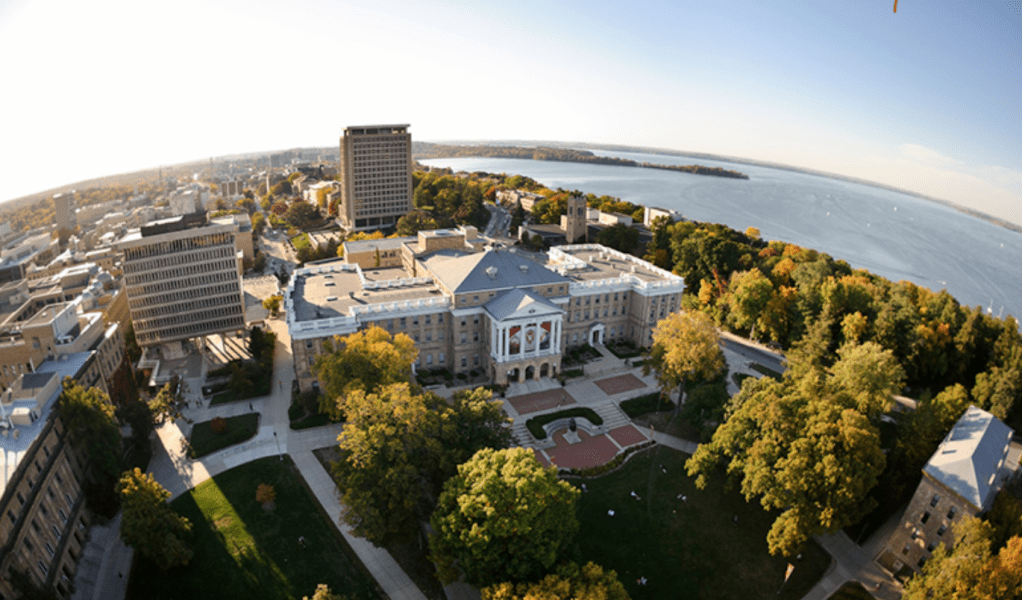
Moreover, I can’t think of a better way to honor the land in question than with a university of the caliber of the UW Madison. On that land cancer treatments and all manner of medical advances are being developed, all kinds of new products and services are being hatched or improved and thousands of kids are learning (well, we hope they’re learning) to think critically and to be productive members of society. What’s there now is far, far more valuable than what was there before. “Colonialization” sometimes gets a bad rap.
We’re now staring down the barrel of a second Trump presidency, which promises to be far worse than the first, as if that’s possible. Trump is now openly promising authoritarian rule and using language intentionally reminiscent of Adolf Hitler. Categorizing people based on their identity is the first step toward scapegoating them for all kinds of problems. What the hard-left just doesn’t get is that when they insist on treating people, not as individuals, but as faceless members of groups — even when that’s ostensibly for their benefit — they contribute to that same dehumanizing group identity that can be used in such horrible ways.
Individualism is at the heart of humanity. Emphasizing group identity is always fundamentally dehumanizing.
Postscript: Here’s a more fair and effective way of estimating what the tribes may be owed. There are about 35 million acres of land in Wisconsin. and the Federal government sold it for $1.25 per acre. (The amount changed over time, but for the sake of simplicity let’s use this number.) That would be $43 million in 1848 when Wisconsin became a state. The inflation rate since then is 39:1. A dollar in 1848 is equal to about $39 today. So $43 million multiplied by 39 comes to about $1.7 billion. The state currently has a $4 billion surplus. So you could use about half of it in a direct payment to the tribes, though how you would calculate which tribe gets how much would be tricky. Also, since the treaties were between the Federal government and the tribes, the liability for breaking the contracts isn’t with the state, but the Feds. And, of course, the politics of this most likely makes it a non-starter in any event. But the principle — compensate the tribal entities and let them decide what to do with it — makes sense because the agreements were between the entities. In any event, programs like the UW’s scholarships miss the mark on multiple levels.
Post-Post Script: Yesterday, Vos said that Republicans would start an “in-depth” review of DEI across state government. We’ve been calling for an in-depth study for years, but it can’t be partisan, it can’t be a witch hunt. The way to do it right is through the nonpartisan Legislative Audit Bureau. If Vos means that he’ll ask the committee that oversees LAB audits to ask for one on DEI that’s good. If he means Republicans will do it themselves, that doesn’t help.
 Yellow Stripes & Dead Armadillos
Hey Dave — I just wanted to provide a little more info about the new Native tuition program at UW–Madison. The program is open only to Wisconsin residents who are enrolled members of one of the 11 federally recognized American Indian tribes in Wisconsin. Each of these tribes has a formal process to enroll members based on its own criteria. UW–Madison will require documentation from a Tribal Enrollment Department that a student is a certified member of one of the 11 tribes. Because each tribe is a sovereign nation that possesses the inherent rights of self-government, eligibility for this UW–Madison initiative is based on citizenship (a political matter), rather than race or ethnicity. As to Bucky’s Tuition Promise and Bucky’s Pell Pathway, you are correct that many of our Native students may already be covered by one or both of those initiatives. However, eligibility for both of those programs is based on family income, and sometimes the federal student financial aid form doesn’t capture all of the real-life nuances of family finances. What we’re trying to do with all of these initiatives is signal to students early on (even in middle school) that we’ve got them covered if they do the hard work of getting admitted here. So we’re making the eligibility as simple and straightforward as possible, and sometimes that means our targeted audiences overlap.
LikeLike