It’s not this complicated. Just let the free market work to pay college athletes what they deserve.
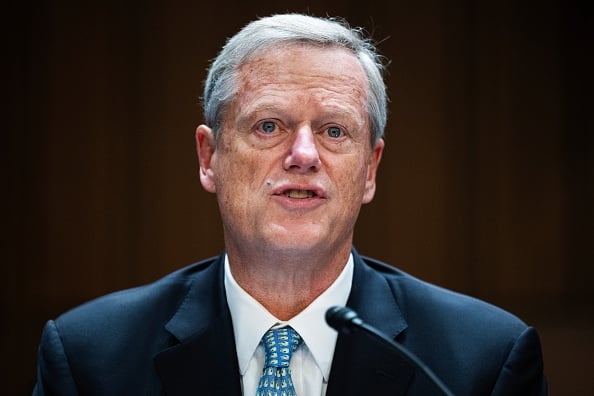
But nope. Instead of doing the obvious and simple thing, NCAA Commissioner Charlie Baker is proposing the Rube Goldberg Memorial Plan to Compensate College Players. It’s a complicated mess that is unnecessary, unfair, designed to short change the players and to maintain the myth of the “student athlete.” It’s not progress. It’s worse than nothing.
Basically, Baker wants to create a new subdivision in Division 1 athletics. This apparently would be defined by the size of the schools’ athletic department budgets, which can range from $5 million to $255 among Division 1 schools. Those bigger schools would be allowed to create “educational trust finds” of up to $30,000 per athlete. But this new subdivision would include all sports and the trust funds would be available to all athletes, regardless of whether or not their sport produces revenue. These schools could also do some other things related to name, image and likeness. That last part might actually be a good thing, but I’ll get to that later.
Let’s start with everything that’s wrong with this. Do you have an hour?
Let’s begin with the money itself. A crummy 30 grand? You cannot be serious when coaches are making millions and everybody else with a piece of the pie (media outfits, food and beverage vendors, apparel makers, etc.) are hauling in enough cash to fill a stadium.
On top of that, why not just pay them the $30,000? Why put it in a trust fund dressed up with some vague educational purpose? I’ll make you a deal. Instead of your employer paying you in cash let’s have them set up a trust fund for you so that you won’t spend it on the wrong stuff. That okay by you?
Further, in a move that defines cynicism, the NCAA wants to hide behind their Title IX virtue signaling. But that makes no sense. It makes no sense to pay pole vaulters, of either sex — or any of the several new ones that seem to pop up every other day — like you’d pay Power Five footballs players. It’s big time football, and to a lesser extent mens’ basketball, that’s generating the billions that pay all the bills. So, it’s football and men’s basketball players that deserve their rightful piece of the pie. When women’s volleyball starts to generate more revenue than costs (in Wisconsin maybe it already is doing that) then pay those athletes accordingly.
My point is that gender has nothing to do with fairness in this case. In fact, if you try to force gender equality on college athletes’ compensation that would be deeply unfair.
Now, about that NIL thing. It’s vague, but what Baker might be implying is that colleges might be free to do what they’re doing under cloak of darkness right now anyway: use NIL deals as an inducement. So, a player puts himself in the transfer portal and then waits for the most lucrative NIL deal to come his way. If that’s what Baker has in mind, I’m for it.
In any event, we don’t need any of this. We already have templates that work really well in professional sports. While I think those systems still undercompensate players and overpay the owners, they’re pretty good. Basically, these systems are set up to combine what’s good about the free market with some reasonable regulation with the goal of sharing of the big pie in a way that maintains competition that benefits everyone in the long-run.
So, step one, let the players form a union. Step two, have that union negotiate with some defined set of power schools in football and in men’s basketball. (It would need to be two separate bargaining units because power schools in football and basketball are different. Example: Marquette. Big time basketball, but no football team.) Step three, through collective bargaining establish minimum compensation for players and other details, like maximum hours of practice and other working conditions. Step four, within those boundaries, allow players to negotiate contracts including direct cash compensation (not trust funds!) and NIL deals.
One of the benefits of this system is that, just like in the pros, players would have contracts that could, at the player’s discretion, cover their entire four or five years at the school. You wouldn’t have to worry that your star quarterback decides he wants to try another school. (See Ohio State.)
Let’s be honest, sports fans. What Baker’s proposal is really about is survival for the NCAA. The 60 or so big football schools have been chafing at NCAA meddling for years. They see no value added by the NCAA because there is none. Baker is fighting for relevance. He doesn’t want to govern 90% of college sports while the big schools do their own thing because the big schools are producing all the revenue that pays him and the vast NCAA nanny state bureaucracy.
This isn’t an honest attempt to pay athletes what they’re worth. It’s a cynical, desperate and goofy scheme to keep the NCAA in the game.
 Yellow Stripes & Dead Armadillos
Old school, invoking Rube Goldberg. Perfect in this instance.
>
LikeLike
Ya know, I thought twice about using Rube Goldberg. Not sure anybody under 50 gets the reference. Then it came to me. Nobody under 50 reads YSDA.
LikeLike
Correction, at least one person under 50 reads YSDA.
LikeLike
Thank you, Michael!
LikeLike
While we’re at it, something needs to change about gambling, which is fully legal and advertises heavily during sporting events and talk radio. As a Hawkeye fan, I am annoyed that the state’s new GOP attorney general, an evangelical Christian, went after Iowa and Iowa State athletes who bet really small amounts on games involving their own universities, but not their own teams. For example, football players and wrestlers bet on Hawkeye women’s basketball games. The NCAA righteously suspended these athletes for a year, ending careers for some and screwing others. Meanwhile, no other attorney generals got onboard with this hypocritical move, so only two universities suffered.
I’m not a gambler myself but I recognize that it’s not going away and the NCAA needs to join the 21st century, or the 20th.
LikeLike
On a related point, it’s only a matter of time before the schools get in on the action just like the NFL. I was surprised at how much gambling and odds were a part of the Sunday night pregame show before the Packer game. I wonder how much problem gambling and family strife this is leading to. The networks are going to be reluctant to report on it because they’re active participants in it.
LikeLike
There are various scams out there that are ready to extort individuals , I’d advice everyone to be vigilant and observant. It’s a cold world. Check out winsburg.net if you need and seek help.
LikeLike