I’m one of a tiny number of Americans who believe that we should still have a presence — military and otherwise — in Afghanistan. In fact, the only other commentator I can find who agrees with me (publicly) is long-time Philadelphia Inquirer foreign policy columnist Trudy Rubin. And even she hasn’t touched the subject in over a year.
And yet, this has become a clear humanitarian nightmare and a less clear, but still very real, strategic national security threat. But I understand why intervention is such a lonely position to take. Americans generally are pretty isolationist in their views. Liberals, in particular, have a knee-jerk reaction against any military actions. Conservatives used to be more hawkish, but the new Trumpy hard-right populists are even more isolationist than the liberals.
There’s widespread agreement that our withdrawal, two years ago this month, was disastrously managed. In fact, Pres. Joe Biden’s approval numbers plummeted because of that and have never recovered. The ugly operation, in which 13 Americans were killed, shook to its foundation Biden’s argument that he was fundamentally competent.
But while Americans don’t like how it was carried out, they were tired of our being there and they support our being gone. It’s one of the few things on which there is bipartisan consensus in this divided nation.
But I disagree with the majority on this one. For both geopolitical and humanitarian reasons I believe we should still be there.
The geopolitical reasons are pretty clear. The Taliban promised that they would not harbor terrorists. Because they broke that promise, Biden ordered a drone strike inside Afghanistan to take out an ISIS leader. Who knows how much other terrorist activity and planning is taking place there and how it may come back to haunt us in the future.
In addition, it’s possible, maybe even likely, that Biden’s withdrawal was read by Vladimir Putin as a lack of American resolve, which encouraged him to invade Ukraine.
It’s tragic that the humanitarian arguments to remain are even more clear. The Taliban promised that they would be more liberal with regard to human rights – especially in their treatment of women – than they had been when they last ran the country. In practice, there has been little improvement, if any.
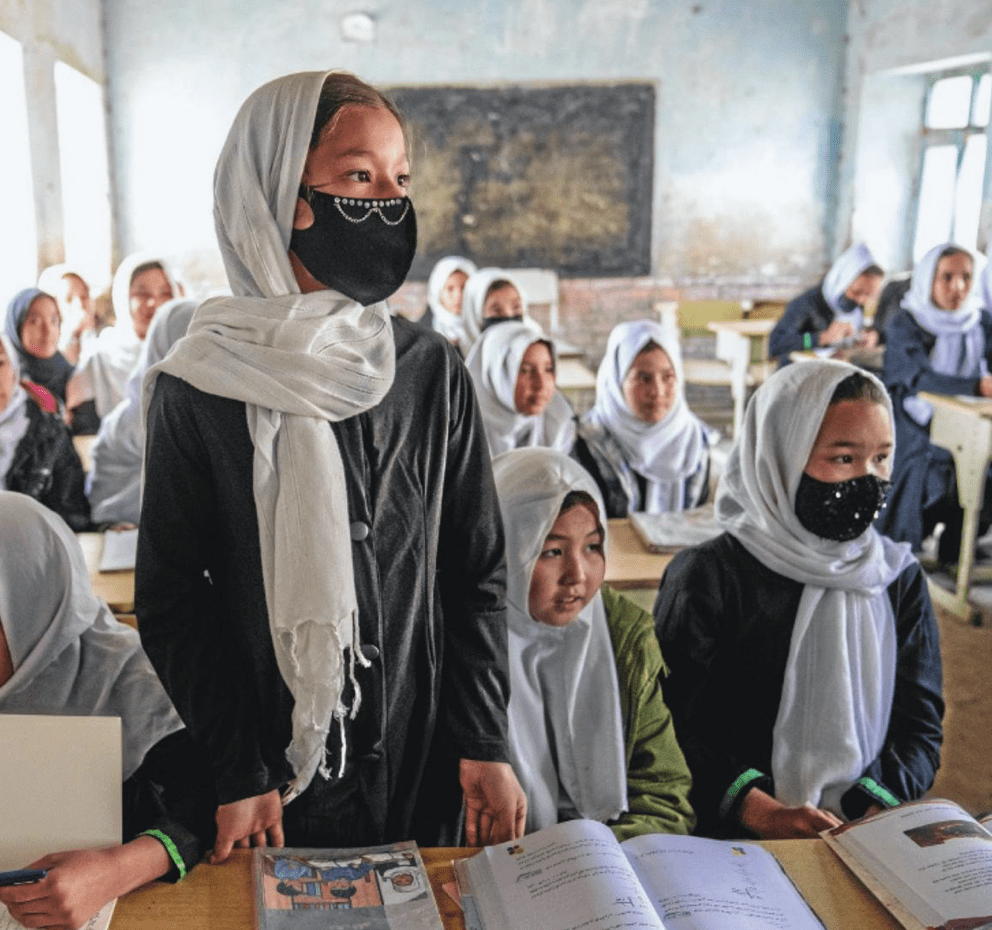
Girls are not allowed to attend school beyond the sixth grade. Women are not allowed in gyms or parks. They may not take jobs in government agencies, with international nonprofits or with the United Nations. They may not be seen in public without wearing a head scarf — and they must wear it in exactly the way the men of the Taliban demand. The Taliban is proud of the fact that some of these rules are based on Sharia law, established 1,400 years ago. It’s so bad that in March the UN said that Afghanistan is the most repressive country in the world for women and girls, depriving them of almost all of their human rights.
A recent Associated Press story detailed the loss of fundamental human rights, the crushing of any opposition, the dismal state of the economy and the human suffering that has come from three years of drought while international agencies have withdrawn aid because they don’t want it getting into the hands of these radical Taliban leaders.
The American hard-left, for reasons I’ve never understood, absolutely obsesses over Israel’s treatment of the Palestinians. That concern is sometimes justified. But why is that same hard-left so quiet about the much worse treatment of women in Afghanistan?
It seems to have something to do with an unwillingness on the left to criticize Islam. It is fashionable to be heavily critical of Christianity – especially Catholics and Evangelicals – and of mainline Judaism while ignoring obvious and extreme violations of human rights committed by Muslim leaders.
My own speculation on this is that it goes to the core of hard-left beliefs and values. Nothing is more sacred on the hard-left than victimhood status. And in that culture the apex of victimhood is being Muslim. That apparently trumps even the abuse of women.
In any event, I believe that classically liberal values of freedom of speech, equality, the rule of law and more are also fundamental human values, applicable everywhere in the world. When they are overturned by ancient creeds, as they are in the enforcement of fundamentalist Sharia law, that should be opposed. I also believe – and I know I’m in a small minority these days – that the U.S. should play a role in spreading classical Western liberal values everywhere in the world where it can. I’m an Enlightenment hawk.
We didn’t go to Afghanistan to export Western liberal values. We went there to root out the murderers of Americans on 9/ll. But if we had stayed long enough to establish a true western style democracy that would have also been in our long-term national security interests. Two years ago we we were enforcing basic human rights and bolstering our own national security with only a few thousand troops on the ground. Think even that was too much? We’ve had 70,000 soldiers in South Korea for 70 years. When we left Afghanistan two decades of work went up in flames.
Two years ago we were already in Afghanistan and we were a tremendous force for good there. After we left the world became more dangerous and life got worse for everyone in that country except the band of extremist thugs who now run it with an ancient iron fist. I accept the fact that we would have had to stay for at least another 20 years for a liberal culture to take root and for it to be able to fight off reactionary tendencies. It would have been worth it. We should have stayed.
 Yellow Stripes & Dead Armadillos
I’m a hawk, too, when the right reasons prevail,.]. Good column.
We need to hang tough in Ukraine as well.
LikeLike
Well, I do agree with you on this. I do think that Vietnam still is in the minds of many persons. As far as Sharia Law goes, it is here in the U.S. in some places.
LikeLike
Hmmm, you forgot that trump started the withdrawal in the fall of 2020 and left Biden with the pieces to pick up. No doubt we could have done it better, but it was a cluster from the git-go. And there was no way anyone, from W to Joe, could have made that country a western style democracy. Too clannish, too much religious zealotry, too much culture we don’t understand.
“Nothing is more sacred in the MAGA sphere than victimhood status”. There, fixed it for you.
LikeLike
I’ve been pondering how to respond to your post. As a veteran who served in Afghanistan, it’s hard to put into words what the sentiment is once you actually are standing in country and feel the energy there. Once you’re there for a few weeks, you start to understand that it’s a giant fake ship that everyone’s trying to keep afloat, but actually never floated to begin with.
I’d encourage you to read this recent post on Reddit from a fellow veteran that provided some thoughts on Afghanistan and what we’re seeing in the news regarding our exit right now.
https://reddit.com/r/Veterans/s/K85RHTOXjp
I don’t think there was ever a good exit strategy. I also don’t know how to define what success would have looked like in that country, if success was ever even an option.
I appreciate your thoughts and your unpopular opinion, but I’d say I have to disagree. In theory, I would love it if we could have a long term presence there and bring the stability and peace and maybe even democracy that we would all like to see there. However, it just never seemed like a possibility once I was there for a bit.
LikeLike