The Rothman Affair may be running its course. That’s fine by me. After all, we’ve got a significant UW leader leaving every other day. We’ll write about Chris McIntosh some other time.
Last week two senior members of the Board of Regents appeared before a Senate Committee and, despite believing that they were constrained in their candor by a confidentiality agreement, did a decent job of defending their decision to fire UW System President Jay Rothman.
At least as far as I’m concerned, their testimony and other information I’ve heard from other sources, more or less puts to rest the idea that Rothman was sacked over one issue or as part of some grand political strategy.
Rather, I think he was fired for the most common reason top level managers are shown the door: he got crosswise with his board. In retrospect we may have seen this coming. Back in late 2023 Rothman negotiated what I thought was a good deal with Speaker Robin Vos. In exchange for some cosmetic changes in DEI programs, he got Vos to free up $32 million in UW staff cost-of-living pay increases and hundreds of millions of dollars in capital projects, including the much-needed new engineering building on the Madison campus.
But the Regents rejected the deal over those minor changes in DEI. I actually wished that the deal had gone much further to dismantle those programs, but DEI is a sacrament on college campuses. Rothman had to threaten to resign in order to get the Regents to approve the agreement.
The Regents knuckled under to this threat, but that had to create some hard feelings. This was not going to be forgotten. And apparently, according to the Regents’ testimony, there were other cases where Rothman played that resignation card. I have to admit that, as mayor of Madison, I had a manager or two threaten to resign. I didn’t forget that when their contract came up for renewal. That kind of drama is bad form for any manager and I can see why any board would resent it.
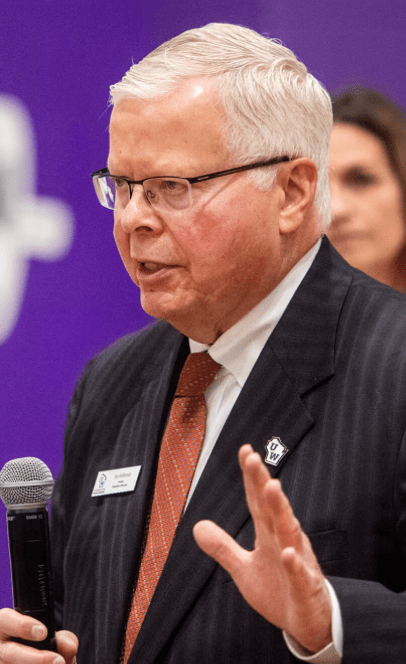
So, on the one hand I thought the Regents were dead wrong and, in fact, foolish to vote down the good deal Rothman had negotiated on DEI. But on the other hand, I don’t think he should have threatened to resign. And if he played that card once, he should have realized that playing it again was going to put him on extremely thin ice.
I have also heard from other sources that when Rothman went about closing eight two-year campuses he did so in a way that campus boosters found heavy-handed and arrogant. Now, it’s true that those campus’ enrollments were low, many of them had been politically (which is to say poorly) sited to begin with and budget constraints dictated their fate. It’s also true that these are highly charged and emotional situations and that Rothman was not going to be given a hero’s welcome no matter how he handled it. Nonetheless. you might say the guy’s bedside manner was lacking.
And then there was the record $256 million increase that Rothman had negotiated for the system in the last state budget. Vos’ price for that was some minimum teaching hours for profs. Again, like the DEI deal, it was a small price to pay for the biggest budget increase in recent memory. But this also mussed easily ruffled feathers on the campuses.
So, the Regents wanting to part ways with their own president (the one they had selected), isn’t all that surprising or all that unusual in the annals of corporate, nonprofit or governmental settings. But usually this plays out in predictable ways which it did not in this case.
Having been part of these kinds of situations both as mayor and as a member of nonprofit boards, here’s how it usually goes. First off, nobody is surprised. By the time it gets to this point, the manager knows what’s coming. If anything, boards tend to wait too long to act. They want to avoid the uncomfortableness and so they try to convince themselves that the situation will improve. It never does.
So when confronted with the inevitable, the manager falls on his sword in exchange for some kind of severance and a lot of face saving. There’s almost always a formal or verbal nondisparagement agreement. The manager is allowed to resign, retire or take time to find another job. The parties agree to speak no evil of the other.
What was unusual about this case was that both those things were missing. Rothman claims he was blindsided — the Regents claim he wasn’t. But there’s no question that legislators and the public had no inkling that this was coming, save for the rearview mirror of the DEI agreement resignation threat. And Rothman, once confronted with the reality that he had lost the confidence of the board, did not go quietly.
All of which drives me to a set of conflicting conclusions. On the one hand, I now think Rothman should have done the honorable thing, He should have accepted the inevitable reality that he could not continue without the confidence of his bosses and announced that he had decide to retire or return to private law practice at the end of the year. He could have said, quite honestly, that he had accomplished all that he had set out to do. The Regents probably would have even thrown him the nicest party possible provided by UW catering.
Instead, for reasons I don’t fully understand, Rothman chose a public fight that he had to know he would lose in the end. And moreover, now he’s invited people to rough up his reputation — a few have taken the opportunity to do so by contacting me.
Yet, despite all this, I hope that if I were a Regent I would have looked at this differently. Yes, Rothman may have been hard to work with, maybe he was a prima donna. But when a guy rings $256 million out of Robin Vos, well, what else do you really need to know?
But I suppose in the end I might not have been able to look past the other stuff and I would have voted with the others to sack the guy. Once a relationship of trust has been broken between a board and a manager it can’t be repaired. That’s just the common dynamics of board-manager relationships. Neither Rothman nor the Regents are blameless in this. Neither side has covered itself in glory.
But rather than going on with pointless finger-pointing (I don’t care who said what when) let’s just move on. Rothman did a good job but he couldn’t manage his relationship with his board. Maybe the board should have looked past that, but it didn’t. And none of this was all that unusual but for the public spotlight brought on it by Rothman himself.
 Yellow Stripes & Dead Armadillos