There’s a certain kind of liberal who doesn’t care much for democracy.
When I became Mayor of Madison in 2003, my experience in government had been as an aide in the legislature and as a Dane County Supervisor. Those bodies operated pretty much as a political science major would have expected. Bills were introduced, powerful committee chairs decided which ones would get hearings and votes. Staff gave policy analysis on the proposals. Decisions were made by elected representatives.
But I quickly learned that Madison city government didn’t work like that. There was an enormous amount of deference paid to staff. Staff opinions were not only sought out but often offered as a matter of course. The city bureaucracy functioned nearly as a separate, and equally if not more powerful, branch of government.
Then there was the odd committee structure. Ordinance amendments and resolutions were assigned to committees by staff, and alders frequently requested additional committee referrals that were granted routinely. A proposal would wander off into this committee maze and pop back up on the council agenda as if by magic.
And the committees themselves were strange creatures. With only a couple of exceptions, the committees were dominated by unelected citizen members. That contributed to the famously long City Council meetings because proposals had not been fully vetted by committees made up of alders.
I thought it was a crazy system, and still do. It was fundamentally undemocratic because so much influence was in the hands of staff and citizen committee members who never had to answer to anyone at an election. But it reflected the character of our city. Madison is a city of bureaucrats and professors, so it makes sense that its citizens would favor a system that placed inordinate power in the hands of city staff and “experts.”
Which brings us, of course, to Humphrey’s executor. That’s the legal community’s shorthand for a case that was argued before the Supreme Court yesterday. You may have also heard about it as the unified executive theory. The argument is that the president should have the ability to fire anyone in the executive branch without finding cause.
The controversy dates back to the early years of the Franklin Roosevelt administration. FDR was frustrated by a Federal Trade Commission member named William Humphrey. Humphrey was a conservative Republican originally appointed by Calvin Coolidge and reappointed by Herbert Hoover. He was an outspoken opponent of Roosevelt’s New Deal programs, especially FDR’s efforts to enforce anti-trust legislation. FDR asked him to resign as his views were not consistent with the new administration’s policies and, after all, Roosevelt had just been elected in a landslide. Humphrey refused, so FDR fired him outright.
Then Humphrey died. His estate, represented by Humphrey’s executor, sued for several months of back pay. They argued that, since Roosevelt had fired Humphrey without cause in violation of the law that set up the FTC, his estate was owed his pay from the time of the firing to Humphrey’s death. The Supreme Court ruled in favor of the estate and that’s been the law ever since: presidents can’t fire members of independent commissions even if those members disagree with that president’s policies.
And this is what the Court now seems ready to reverse. Liberals are freaking out over this — ironically since it was a famous liberal president who wanted this power to begin with. Conservatives like the prospect of increasing presidential power, but they should be careful what they wish for. Inevitably, there will be a Democrat back in the White House.
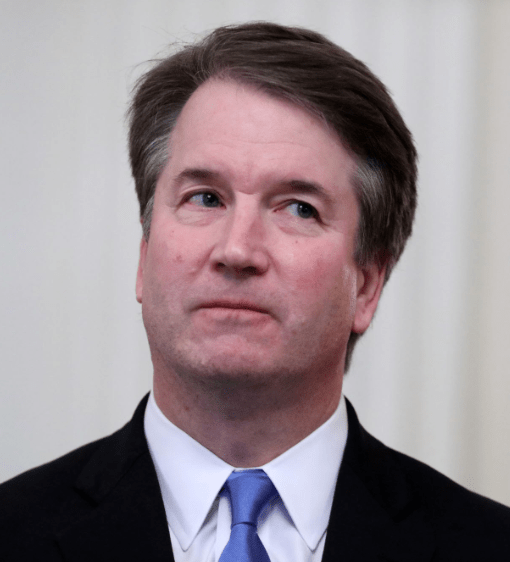
In a general sense, I think it’s a mistake to overturn Humphrey’s. Some degree of insulation from raw politics is a good thing in some cases. Even the current Court sees this, as the conservatives on the Court have made clear that they don’t want their ruling to apply to, for example, the Federal Reserve Board. In oral arguments yesterday Justice Brett Kavanaugh asked the Solicitor General to give him a rationale for overturning Humphrey’s in a way that did not grant the president power to fire members of that Board. Kavanaugh understands that our economy is helped by a Federal Reserve that is not seen as making interest rate decisions that blow with the political winds.
But let’s step back and try to understand what’s happening here. Since at least the Progressive Era, elites have always seen politics as dirty and corrupt — and dangerous, as it could lead to patronage systems like Tammany Hall. The elites wanted as much power as possible placed in the hands of people like them, with lots of years of education and high-minded ideals — including during that Progressive Era the high-mindedness of eugenics. To them, sterilization of the lesser peoples seemed like a great idea.
So, this case is part of a much bigger trend. Call it a mass revolt against the elites. Throughout history, when trade or technology concentrates wealth and widens the economic and cultural gap between a relatively small number of affluent and “educated” elites and everybody else. everybody else objects. They come to see the experts as mere snobs, paternalistic know-it-alls who are dismissive of the plight and the values of those below.
They’re right. The elites really do think that they’re a basket of deplorables who cling to their guns and their religion. But this understandable reaction against experts can also lead to things like immunization phobia and all of the death and suffering that will spring from it.
We’re seeing this revolt happening all over the political landscape and all over the developed world. This Humphrey’s case is just another example. On the actual merits of the case, I’ll lament the new power given to the president — especially this president. But on a higher level, the elites had it coming.
 Yellow Stripes & Dead Armadillos