The people who run public media could have risen to their own image of themselves. Instead they stayed defensive.
Conservatives have complained of a liberal bias from taxpayer-funded media for half a century. Richard Nixon tried to cut it soon after it was created under Lyndon Johnson. The attacks have not only been sustained, but they’ve also come from moderate conservatives, like George W. Bush and Mitt Romney. This isn’t new and isn’t just about Donald Trump or the Freedom Caucus.
So, it’s just not plausible anymore to argue that there’s nothing to this, that the bias is just being imagined by paranoid conservatives or that it’s some nefarious plot to keep the truth away from the American people.
If you still think it’s imagined then how do you explain the fact that 67% of NPR listeners describe themselves as very or somewhat liberal while only 11% think of themselves as conservatives and 22% middle of the road?
And yet, when PBS’ CEO Paula Kerger was asked in an interview by the New York Times if she acknowledged any of the criticism that PBS is biased, she said:
“No, I don’t. First off, so much of the discussion has been around news. A little less than 10 percent of what we do is actually news… We work really hard to try to bring multiple viewpoints forward. We take to heart the fact that we serve all of America and that should be our focus.”
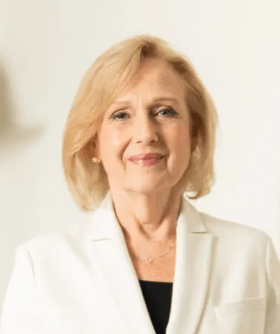
So, for over 50 years conservatives, including reasonable moderates like Bush and Romney, have been making all this up? The heavy skew of listeners and, I assume viewers, to the left is just happenstance?
Kerger’s head-in-the-sand defensiveness is echoed over at NPR. When editor Uri Berliner tried to sound the alarm on this, the NPR brass didn’t take it to heart. They didn’t call for a study. They didn’t convene an internal team to evaluate his concerns. They were defensive. They circled the wagons, dismissing his arguments and attacking him personally. Within a week or so they had forced him out.
All of this is contrary to how public media leaders — and I think, most public media consumers — like to think of themselves. We like to think of ourselves (“ourselves” — I’m a big consumer of both NPR and PBS) as reasonable people who are open to criticism. We like to think of ourselves as people who evaluate the evidence and then act on it.
So, why do we choose to dismiss out of hand the evidence provided by a half century of conservative concerns about a liberal bias? Why do we choose to ignore the evidence of an audience profile that would seem to confirm those conservative concerns? Why do we treat an editor, who professes to be liberal himself and who details how this bias plays out, as a traitor?
Last week I was a “day sponsor” for my beloved independent public radio station, WXPR in Rhinelander. I even kicked in some more bucks during their spring pledge drive. I don’t hate public media. But I think it needs to be what it likes to think it is.
The truth is that PBS and NPR do have an obvious liberal bias. Maybe Kerger felt she couldn’t admit that because she needed to deal with her own internal constituencies. But instead of flat out denying it, she could have said that she acknowledged the legitimate concerns that people have, that she takes them seriously and that PBS will work to be thought of as objective by everyone.
I hope that public broadcasting — especially my local station — is not driven out of existence by this latest attack. Previous attempts to defund it were beaten back with Republican support, but times have changed. In 2011, 26% of NPR listeners said they were conservative and 37% said they were liberal (compared to 11% and 67% in 2023). So, today’s GOP moderates, what are left of them, might feel it’s no longer worth fighting for NPR, especially when they might want to spend their political capital on more immediate concerns, like increasing the SALT property tax deduction.
If this turns out to be the end for public broadcasting it will be this kind of defensive attitude that will have been its demise.
 Yellow Stripes & Dead Armadillos
Time out: George W. Bush was a “reasonable moderate”? Come on, man. You’re just saying that to get under my skin. I know that he seems so restrained in comparison to today’s freaks, but he’s also the jerk who lied us into a disastrous war, tried to privatize social security, stoked a moral panic over gay marriage, tried to ban embryonic stem cell research, cut children’s health care and justified wide scale civil liberties violations and torture.
LikeLike
Public broadcasting is largely centrist, but over the last 40 years there’s been a concerted effort, funded with hundreds of millions of dollars, to shift the Overton window to the right. I think Nixon or Regan would find the current programming on public broadcasting, on average, quite reasonable.
There is no equivalent top-down effort focused on counteracting this trend and pushing public opinion to the left. Movement of public opinion towards the left typically occurs as a response to bottom-up mass protest and activism. Over the past few decades it’s been clear that the big money has succeeded in their goal far more than the grassroots.
On this current trajectory, in another 40 years, people will be complaining that the “liberals” on public radio are saying we shouldn’t be conducting vigilante witch burnings: they should go to trial first, then the mob should be allowed to burn them.
LikeLike
“If you still think it’s imagined then how do you explain the fact that 67% of NPR listeners describe themselves as very or somewhat liberal while only 11% think of themselves as conservatives and 22% middle of the road?”
Elsewhere you state in 2011, 26% of listeners were conservatives. A Gallup poll from fall of 2024 shows NPR’s conservative listenership decline closely mirrors the overall decline in trust and consumption of traditional media by conservatives from 2011 to 2024 (38% to 12%).
Has NPR programming shifted so far left that it has driven out conservative listeners? Perhaps. But perhaps NPR has fallen victim to the very successful campaign of conservatives to destroy trust in the legacy media which prompted the exodus of conservative listeners, regardless of any real or perceived shift in programming bias.
LikeLike