Here are four random things I believe. I’m against the death penalty, I’m for reproductive freedom, I’m for gun control and I support a higher minimum wage.
Now, there’s nothing I can see — no unifying philosophical principle — that links those positions together. And yet, it’s fair to say that the average American would look at those four ideas and conclude that I’m a Democrat.
The trouble is that most Americans don’t look at the world that way. They hold positions that are “incoherent” when viewed by partisans or even just those of us who consume a lot of news.
I think one of the things Democrats need to do in their soul-searching is to try to get their heads around that idea: the voters they need to win over don’t hold views that partisan Democrats would think of as “consistent” — though, in reality, there’s nothing consistent about the views most partisans hold.
Moreover, not only do real human beings with lives that don’t revolve around the latest editions of the New York Times and Wall Street Journal (as mine pretty much does — no, I do not count myself as a real human being) hold “inconsistent” views, but even within those views there is nuance that partisans don’t often appreciate.
So, for example, the generally accepted view within the Democratic Party is that “migrants” (never, ever to be spoken of as “illegal aliens”) are all hard-working and wonderful folks, fleeing oppression in their home countries and looking to start a better life here in America. To partisan Democrats the fact of their being in the country illegally is just a trifle and to even bring it up suggests racism.
And yet the views of most Americans are more nuanced — and, I would say — sensible.
A January poll taken by AP-NORC found that about eight in 10 U.S. adults favor deporting all immigrants living in the U.S. illegally who are convicted of a violent crime — including about two-thirds who are strongly in favor. But deporting immigrants who are in the country illegally and have not been convicted of a crime is much less popular with only about four in 10 in support.
Similarly, ending birthright citizenship is supported by only about three in 10 Americans.
So, a sensible position for Democrats to take — both in terms of good public policy and politics — is to go along with Trump on deporting migrants with violent criminal records while opposing mass deportations of law-abiding migrants and ending birth right citizenship. They should also support making it harder to enter the country illegally or through asylum claims while increasing legal entries and putting the 11 million illegal aliens (pardon me) on a path to citizenship.
The same sort of thing holds true for climate change. Trump immediately withdrew the U.S. from the Paris climate agreement to reduce greenhouse gas emissions. But about half of Americans “somewhat” or “strongly” oppose that action, and even Republicans aren’t overwhelmingly in favor. Only about two in 10 U.S. adults are “somewhat” or “strongly” in favor of withdrawing from the Paris agreement, while about one-quarter are neutral.
On the other hand, electric vehicle incentives are unpopular. About six in 10 U.S. adults in a Pew Research Center poll from last year opposed rules that would make EVs at least half of all new cars and trucks sold in the U.S. by 2032. My guess is that the EV stuff isn’t popular because of the image of the EV car buyer: an affluent, urban, condescending, preachy, virtue-signaling NPR listener. People wonder why these folks need the subsidy (and why NPR needs a taxpayer handout, while we’re at it.)
Also on the energy front, Trump signed nonsensical orders designed to reduce regulatory requirements for oil and natural gas production. He promised to establish American “energy dominance” in part by boosting oil and gas drilling, including on federal lands — never mind that we’re already producing more fossil fuels than ever before. An AP-NORC poll found that only about one-third of Americans “somewhat” or “strongly” favor increasing oil drilling on federal lands, while about four in 10 are opposed.
According to AP VoteCast, only about four in 10 voters in the 2024 presidential election said U.S. energy policy should focus on expanding production of fossil fuels, such as oil and gas. Most — 55% — said it was better to focus on expanding use of alternative energy, such as solar and wind.
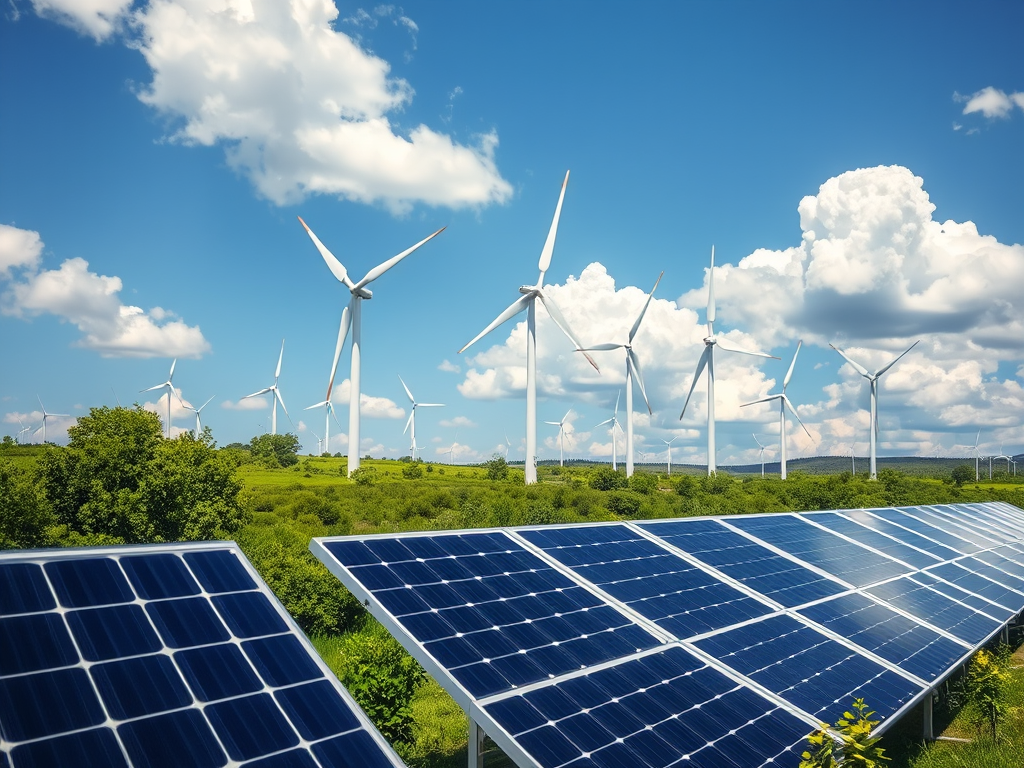
So a sensible Democratic position would be to continue to support the transition to wind and solar, but without denigrating fossil fuels or taking a posture of moral superiority. Retreat for now on the whole electric car thing and let the market develop as it will. I think Biden was right on EVs as a matter of public policy, but they got caught up in the culture wars. Let that cool — as the planet gets hotter — and see what happens in a few years.
That’s just two issues — immigration and climate change — but similar sensible middle grounds could be found on most any issue. For example, I don’t think most Americans would support discrimination against transgender people, but they understandably object when their local school district says that teachers can’t inform parents when their kid asks to change his pronouns.
My party gets into trouble when it demands “consistency” between, what for most people, are unrelated topics and when it insists on purity on every issue. The way back into the good graces of American voters is through listening to them. For the most part, they’re making a lot of sense.
YSDA stands for
Free speech.
The rule of law.
Reason.
Tolerance.
Pluralism.
 Yellow Stripes & Dead Armadillos
You’re absolutely right. Two other things to consider:
LikeLike
“I think Biden was right on EVs as a matter of public policy, but they got caught up in the culture wars.”
It would be helpful to your argument if you could cite specifics as to how the Biden administration got caught up in the culture wars with regard to energy policy in general or EVs in particular. Contrary to this assertion, the emphasis of the previous administration was on incrementalism, job creation, the resurgence of manufacturing in the US and the need for goods to be made here in America and not left for China to corner the market.
As an example, Jennifer Granholm, the previous Secretary of Energy, wrote an op-ed in the NYT several days ago. Opinion | China Will Be Thrilled if Trump Kills America’s Green Economy – The New York Times. The Secretary has spoken on many occasions, whether it was the opening of a battery manufacturing plant for EVs in Washington or celebrating fusion energy breakeven at the National Ignition Facility at Lawrence Livermore Lab. What she said at then wasn’t any different than what she wrote in that NYT piece. No mention of trans, woke or DEI. Perhaps I’m just not understanding what you mean by the culture wars in this context.
LikeLike
Thanks for the comment. I explained the reference to culture wars in the paragraph where I described what I thought was the cause for the unpopularity of pro-EV policy found in the polls: I think EVs became associated with a certain kind of elite liberal sensibility. I think that’s unfortunate because I think encouraging EVs is a good thing.
LikeLike
Like the policy or not, automaker are heading in the EV direction and have invested enough that they aren’t going back.
LikeLike
Yes. Totally agree. I’ll give Biden credit for priming the pump (sorry for the pun).
LikeLike