Today is the 60th anniversary of the march on Washington during which Martin Luther King, Jr. delivered his famous “I have a dream” speech. It was a march that worked. That’s a rare thing.
As a political strategy I’m not a big fan of marches and street protests. As a rule, I think these things are usually counterproductive because they tend to turn off the very people they need to persuade. It’s natural that a march would attract people who feel the most strongly about the reason for the march and the result can be messages and actions that alienate anyone who is undecided or feels less passionately about the cause.
So, for example, in the aftermath of the Hobbs decision I cringed when I saw pro-choice protestors carrying signs that read, “Free Abortion On Demand Without Apologies.” That kind of militant messaging fed right into the conservative argument that liberals want to make abortion legal right up to delivery. About two-thirds of Americans support the right to an abortion pre-viability outside the womb. Support plummets after that. In fact, according to a comprehensive Pew Research poll 77% of Americans oppose third trimester abortions simply because a woman wants one, and strong majorities favor a 24-hour waiting period, parental consent for women under 18 and other restrictions. The militant view is not nearly the majority sentiment.
There are lots of other examples of street protests backfiring or being ineffectual. Some Black Lives Matter protests in the summer of 2020 turned violent which turned the public away from support for the movement. Here in Madison protesters did their cause incalculable damage when they destroyed the statue of abolitionist Hans Christian Heg. And a strong case can be made that protests against the Vietnam War lengthened it because Presidents Lyndon Johnson and Richard Nixon didn’t want to be seen as caving to the unpopular protesters even as the broad middle class turned against the war. After awhile the middle class didn’t like the war, but they disliked campus radicals even more.
And as for ineffectual, you’d have to put the big protests here in Madison against Act 10 in that category. A hundred thousand people or more over about a month or so descended on the Capitol in the winter of 2011 to protest the move to kill public employee unions. The protests were well-organized, 100% peaceful and, in the end, without impact. The bill passed pretty much in the form that Gov. Scott Walker introduced it. A recall effort that sprang from that mobilization failed with Walker becoming the first governor ever to survive one and, probably, strengthening him for his reelection bid.
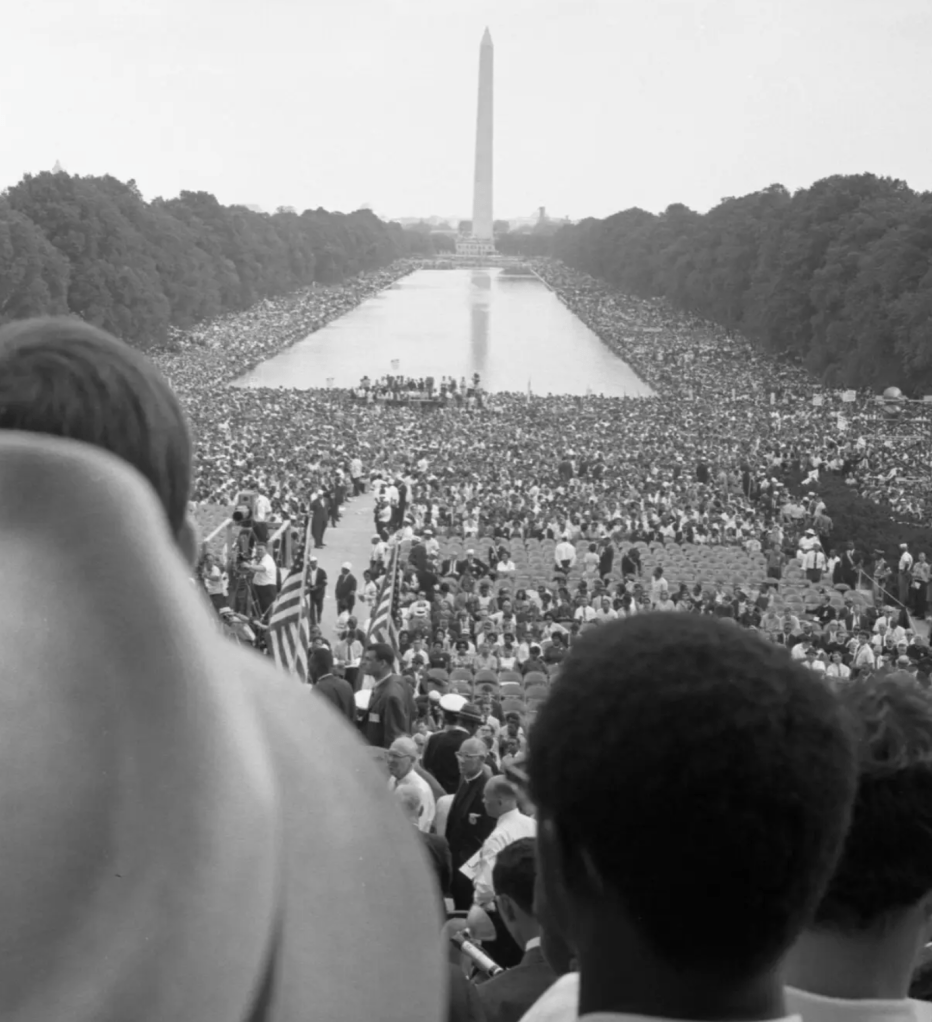
So, why did the big march in Washington on August 28, 1963 succeed?
I suppose it’s important to first make the case that it did work. Within a year of the march, Congress passed the Civil Rights Act of 1964 and followed that up with the Voting Rights Act of 1965, two pieces of landmark legislation that had been stalled up to that point. To be sure, those accomplishments didn’t happen solely because of the march. President Kennedy’s assassination, the elevation of the highly effective legislative tactician Lyndon Johnson to the presidency and the firebombing of a Black Baptist church in Birmingham less than a month after the march all contributed.
But there’s no question that the march set the stage. So, again, why did it work?
It was big for one thing. An estimated 250,000 people. It was entirely peaceful. And it gave MLK a perfect setting to deliver a powerful and unforgettable speech. But I’d say the main reason for its success was that it was built around a winning message. In fact, it was billed as the March for Jobs and Freedom. The message was that Black Americans wanted to work hard and succeed. They wanted simply what white America had. They wanted the promise of America. Only out and out racists could oppose that message.
In contrast, the women’s marches of January 2017 came to naught precisely because they were the women’s marches. They were built around identity, not a universal goal and a popular idea. It doesn’t help a movement to start out by excluding half the population. And the pink hats didn’t help. Sarcasm is for bloggers. Marchers need earnestness.
This is important because I think it points up the most basic way in which the left has gone wrong in recent times. It has become all about exclusive identity instead of inclusive values.
I have a dream that some day progressives will relearn the lessons of a steamy day in Washington more than a half century ago.
 Yellow Stripes & Dead Armadillos
I agree with your conclusion Dave. I would add that the Democratic party of 2023 is_radically_different than the Democratic party of 1963. Besides the focus on identity, which is really window dressing, imo of course, the Democrats on most of the substantive issues are the same or worse than the Republicans – War, Censorship, Big business, etc. People can see through the rhetoric to the underlying rot.
LikeLike